Pages

Showing posts with label Guest Blogger. Show all posts

Friday, February 13, 2026

Blog Tour: Guest post from Evy Journey , Author of Artsy Rambler: Mindful Journeys to Paris and Beyond


Title: Artsy Rambler: Mindful Journeys to Paris and Beyond
Author: Evy Journey (with Rich Journey)
Publisher: Independent
Publication Date: October 30, 2025
Pages: 268
Genre: Nonfiction: Art and Travel
Formats: Kindle & Free with Kindle Unlimited

Experience the transformative power of art when you see the rich and vibrant city of Paris through the eyes of a mindful artsy traveler. From the light-inspired grandeur of Gothic cathedrals and the fresh beauty of Impressionism, sinuous forms that speak to our innate sense of beauty, and the rare library that helps one define oneself; to the role of French cuisine and cultural events in shaping the city's uniqueness, this collection of essays will take you on a journey of discovery and self-reflection.

Amidst the charm and allure of Paris and its art, questions arise and conflicts are explored. Can art truly enrich our understanding of life? Can it help extricate us from constantly waging wars? And how does a urinal become a symbol of controversy that challenges our conception of art?

If you enjoyed "A Moveable Feast" by Ernest Hemingway, this thought-provoking and sometimes meditative collection of essays will unveil the beauty and complexity of the world around you by unleashing the power of art as you satisfy your wanderlust.

Read sample here.

Artsy Rambler: Mindful Journeys to Paris and Beyond is available at Amazon.

Enjoy this guest post:

Crossing Cultures Through Food - by Evy Journey

How many ways can you get to know a culture different from that in which you grew up? One way is through cuisine—usually a delicious, pleasant, and painless way of immersing yourself in an otherwise strange culture, if you don’t balk at trying unusual foods. Because I’ve experienced various cultures, I am fairly adventurous about food. And I’ve learned that we bring our life histories into any experience—whether it’s about food or any other foreign tradition. 

I love many things Japanese. The food, the architecture of traditional Japanese homes, some of their cultural values (respect for elders, for instance). We've added a few Japanese touches to our home, and we’ve traveled to different cities in Japan, a cinch on their Shinkansen which is faster than the French TGV (train de grande vitesse—speed  train). Nothing in this high-tech, car-obsessed culture of ours matches either one of these train systems. That fact, in itself, tells us something about culture and society. What we value more, for instance. 

I have to admit, though, that I know little about Japanese farms and indigenous Japanese culture except for the little bit I've seen in movies. So, I’ve turned to reading books that dig into this subject—like Japanese Farm Food by Nancy Singleton Hachisu, a professional teacher/chef married to a modern Japanese farmer. It gives an intimate look into one Japanese farm and how the family living in it eats to live—a fact that’s helpful to keep in mind. Translating a dish from one country to another, or executing anyone’s recipe in your own kitchen never really produces exactly the same result. So many things can change your final dish.

I ate things I was familiar with when I was in Japan, but I tasted soft tofu served at a mountain buddhist retreat that was like nothing I’ve had before. It looked like regular tofu, but creamier, more like custard in taste and feel on your tongue. I’ve looked, in vain, for something like it at home.

Then, there’s unagi (eel)—that long slender fish that looks like a slithering snake as it swims in the water. In some restaurants in Japan, they kept live eels in tanks, ready to be fished out when customers ordered them. At home, I’ve only had pieces of seasoned cooked unagi served on top of a clump or bowl of tangy salty-sweet rice. 

Like everyone, my husband and I have food preferences and prejudices, shaped by the culture in which we grew up. And neither of us could speak Japanese. We didn’t ask to try the eel. 

This American chef/author moved to Japan equipped with the sensibility advocated by California food guru Alice Waters, one much like the French concept of terroir―organic, as close to the source as you can get, and simple preparations that make main ingredients shine. These are practices easy to adapt to the ingredients and techniques of a Japanese farm.

ABOUT THE AUTHOR

Evy Journey writes. Stories. Blogs (three sites). Cross-genre novels. She’s also a wannabe artist, and a flâneuse (an ambler).

Evy studied psychology (M.A., University of Hawaii; Ph.D. University of Illinois) initially to help her understand herself and Dostoevsky. Now, she spins tales about nuanced multicultural characters negotiating separate realities. She believes in love and its many faces.

Just as she has crossed genres in writing fiction, she has also crossed cultures, having lived and traveled in various cities in different countries. Find her thoughts on travel, art, and food at Artsy Rambler.
She has one ungranted wish: to live in Paris where art is everywhere and people have honed aimless roaming to an art form. She visits and stays a few months when she can.

Thursday, October 16, 2025

Spotlight: Guest Post from Kayleigh Kavanagh, Author of One Foot in the Ether: Whispers of the Pendle Witches


Title: One Foot in the Ether: Whispers of the Pendle Witches
Author: Kayleigh Kavanagh
Publication Date: September 29, 2025
Pages: 400
Genre: Historical Paranormal Fantasy
Formats: Kindle
  
Demdike and Chattox, famed witches of Pendle Forest, might be dead, but they’re not gone. Bound to their bloodline, they’ve spent the past two and a half centuries watching over their descendants, waiting for when they’ll be needed. 
 
When 14 year old Yana comes into her psychic abilities and inherits the ‘eyes of the Chattox family’, she can see the long-dead witches, as well as an encroaching evil. But even with this foreknowledge, she’s trapped by marriage interviews and being unable to see her own future, and more importantly, whoever her future husband will be. 
 
Demdike’s healing gifts are alive and working in Claire, a mid-30s midwife well renowned for her skills and holding her tongue. The Secrets of Pendle are safe with her and her midwives. However, when surgeons looking to make standardisation the norm encroach on her territory, she soon realises how, even a respected woman is vulnerable in a patriarchal system. 
 
The two descendants must come together to protect the ones they love from an ancient evil, all whilst balancing their lives and the cruelties of being a woman in a man’s world. Set in late 1800s NW England, this book has all the elements of the area: strong, hardy people, atmospheric horror and days as unpredictable as the weather.  

 
One Foot in the Ether: Whispers of the Pendle Witches is available at Amazon.


 10 Things You Might Not Know About One Foot in the Ether: Whispers of the Pendle Witches
by Kayleigh Kavanagh
 
1. The book was originally meant to be set exactly two hundred years after the trials in 1812, but after the author learnt more about the time period, set it later for historical accuracy.

2. Schools were a big push by Queen Victoria, and this enabled a lot of women and the poorer populous to gain an education. William was originally meant to introduce the idea of schools to the north. However, when the book had to be set later than 1812, he then became someone in support of her movement who wanted to ensure even the poorest of his community could gain an education.

3. There were several campaigns to discredit midwives, despite their having much better results (compared to the doctors). Just like Claire experienced, the women were shown as incompetent and dangerous, even though the doctors had higher death rates. Repeated smear campaigns against the midwives eventually helped institute standardisation as expectant mothers (and fathers) chose hospitals as the ‘safer’ place to give birth. I think Claire would be both happy and unhappy about this, as the NHS was a dream of hers, and it keeps her women safe, but men being involved in the delivery process is something she would still be vehemently against. 

4. The revival of the spiritualist movement in the late 1800s was key to the later Wicca religion. The two are both credited with the spiritual movements we see today, and the encouragement towards alternative healing, which is primarily focused on foods and herbs. The remedies the cunning folk (Demdike and Chattox) used to use, and were accused of witchcraft for.  

5. The cunning folk were very similar to shamanic healers in that they created ‘natural remedies’ from the earth and what was available to them, and helped with healing spiritual matters. From melancholy and low spirits (what we would now recognise as depression) to removing and fighting invading spirits and demons. They were a jack of all trades and considered vital to the community. Until they weren’t. Supposed demonic possessions did rise in their absence though…

6. Demdike is still believed to haunt the places she lived and died, and this occultist belief informed the book and made me think, ‘why might she still be around’.

7. Chattox and Demdike were considered rivals in life, but by modern standards, they would be considered ‘sister witches,’ and this filtered into the novel, making them more like sisters who irritated one another rather than arch-enemies.

8. Some people think Device was a misrecorded name, and their surname was actually Davies (a popular Northern surname). Hence, why the midwife is named Claire Davies.

9. Lord James was initially meant to be a reincarnated James Device, or Nowell, but this idea was later scrapped. Instead, James was hinted as being Yana’s youngest sibling in the epilogu,e who was born after the cleansing ritual, and Nowell is off suffering in his afterlife.

10. Chattox accidentally spoils big reveals because she’s terrible at reading the room despite her gifts of foresight.


About the Author


Kayleigh Kavanagh is a disabled writer from the North-West of England. Growing up in the area, she learnt a lot about the Pendle Witches and launched her debut novel around their life story. Her main writing genres are fantasy and romance, but she loves stories in all formats and genres. Kayleigh hopes to one day be able to share the many ideas dancing around in her head with the world.
Her latest book is the historical fantasy, One Foot in the Ether: Whispers of the Pendle Witches. 
You can visit her on Facebook, Instagram, Goodreads and Tiktok. 
 

Tuesday, December 10, 2024

Blog Tour: Guest Post form George Almond, Author of Even Higher Then Everest


Author: George Almond
Publisher: Paragon Publishing
Publication Date: October 26, 2018
Pages: 274
Genre: Historical Fiction/Adventure Fiction/Biographical Fiction
  
EVEN HIGHER THAN EVEREST is a vastly entertaining, fact-based, yet dramatized story of a London cockney heiress who, in the 1930s, sent a small fleet of double winger biplanes on a daring and remarkably dangerous mission to fly over Mt. Everest and film the world’s highest and most famous mountain peak.
 
Author George Almond met the Himalayan heroes (Sherpa Tenzing and Lord Hunt), who explained how the first aerial photographs, taken in 1933, assisted their heroic ascent of Everest in 1953. Captivated by this dazzling and little known tale, the book - Even Higher than Everest - is a dramatized recount of the tenacity of the heiress Lucy Houston and her team of prestigious aviators whose five aircraft flew to the world's highest mountains. 

A short 1930s film from footage of Houston’s flight, titled Wings Over Everest, won an Oscar in 1936 from the Academy of Motion Picture Arts and Sciences.  https://en.wikipedia.org/wiki/Wings_Over_Everest 
 
Commenting on his work, author George Almond says: “Inspired by true events of that first flight over Everest, the novel Even Higher Than Everest follows skilled personnel in finance, diplomacy, media, filming, engineering and aviation, all aiming for a shared objective. How these characters blended successfully, overcoming constant setbacks and challenges, was in itself a major accomplishment. I have followed the truth, tweaking just a few elements, in recounting the event.”


The Inspiration Behind Even Higher Than Everest
By George Almond

Being a serial adventurer myself, I was immediately drawn to the story when Lord Hunt and Norgay Tenzing (the first man to successfully climb Everest) revealed how they had examined aerial photos taken by the pilots in 1933 to identify the best routes to the top.  Due diligence came no higher! 
After spending time on square-rigged ships, I was impressed that the heroine of my story, Lucy Houston, had bought the beautiful steam yacht Liberty which had been built for Joseph Pulitzer, one of Americas's enduring and prominent leaders. 
My lawyer in Century City advised me write the story and then Oscar winner screenwriter Julian Fellowes (Downton Abbey) added valuable impetus because his relative had led the 1933 flight expedition.
Once I started on my archive hunt, there was no stopping me.  I went to all the original locations: Houses of Parliament, Westland aircraft factory, RAF Museum, Kinrara (Lucy Houston's priceless estate in Scotland), the Maharaja of Jodhpur's hunting lodge, the Terai jungle and then the foothills of Everest. In the photographic archive of The Times in London, I found a box of precious photographs which described the rest of the story. 
From a junkyard for retired RAF aircraft, we found the wreck of the only surviving biplane which is helping us finalise manufacture of a new Everest-enabled biplane (Lucy2). For this associated venture, I am supported by highly experienced professional British and American pilots who agree, like many of the world's 500,000 pilots, that touring the Himalayan peaks in a single engine open double winger riding invisible currents as wild as Hawaiian surf is no place for scaredy-cats!
Along the fascinating turns on my journey, many significant film professionals have urged me to continue. Sadly I'm no natural author. I did not study English when I was at Oxford University so the finer points of literature may be missing in my text, but hopefully the story will give great credence to those who can admire the 35 men under Lucy Houston's patronage who created a unique moment in Everest's history.
I turned to Amazon for publishing my novel and am pleased that I did so.

Watch the Trailer:


About the Author
 
George Almond, the grandson of a Wyoming horse rancher, enjoys revisiting great adventures. Born in London and educated in France and Oxford University he has ridden horseback 1500 miles across Europe, worked for Calgary Stampede's Champion Chuck Wagon driver,  sailed two oceans with the world's most experienced square-rig sea captain, taken the Flying Scotsman steam train from Boston to Houston where he was hired by Neiman Marcus. These days Almond makes his home in Europe, working on other books, including one about Jack Rackham and his two lady pirates who formerly sailed the Caribbean, preying upon merchant vessels.


Wednesday, September 11, 2024

Blog Tour: Guest Post and Excerpt from That Day and What Came After by Rebecca Daniels

by Rebecca Daniels
Publisher: Sunbury Press (June 4, 2024)
Category: Non Fiction, Memoir, Death, Grief, Bereavement , Life Stages
Tour dates: September 9-October 8, 2024
ISBN: 979-8888192047
Available in Print and ebook, 182 pages

Amazon
Sunbury
What if you came home one day and found your husband dead in his favorite chair? This grief memoir explores the author’s experience of the unexpected death of her husband from sudden cardiac arrest a mere three months after his doctors had pronounced him hale and healthy. The author shares her experiences in the immediate aftermath of the abrupt shock of discovery, reminisces about the details of the couple’s late-in-life courtship and marriage, and imparts other experiences she has had along the grieving road in the years since becoming a widow.

In our society, we often don’t want to talk or even think about death, so stereotypes about widows exist. However, each person’s grief journey is unique, and sharing tales of those experiences can be helpful and useful for those who find themselves in a similar situation. Though not a self-help book, this memoir is the story of a widow who defied the stereotype that widows are expected to “get over it” and move on with their quiet lives. Instead, this widow “got through it” and is now sharing her journey in hopes of helping others in comparable circumstances.

Enjoy this guest review: 
 

That Day and What Came After

Guest Review by Linda Lu

“Once I was alone and could let go of my self-imposed constraints,
I discovered by instinct what keening meant. I wept and wailed and
sobbed—deep, guttural sounds—as sorrow overtook me, and I rocked
and shook until I was exhausted.”

A stunning memoir from the author of some of the best books I've read in the last decade, 'That Day And What Came After,' is an intimate look at grief, pain and moving on in the wake of a tragedy.

Rebecca Daniels and her husband were only married for six years before his sudden and unexpected passing from a heart attack. Coping with the loss of her husband was not something that Rebecca thought she would have to do so soon into their marriage, and she found herself adrift, looking for help from any source.

Rebecca had experienced grief before in her life. As a young teenager, she lost her own father and watched as her mother dealt with young widowhood with few resources. Now that she was going through a similar experience, Rebecca decided to write this memoir as a guiding light for those that are also grieving a lost loved one.

After a loss like the one Rebecca experienced, there is a term that gets thrown a lot called 'the new-normal.'  Or, rather, the new patterns that your life will fall into without that person around. Rebecca was told by more than one person that without her husband, her life would fall into a 'new-normal,' and she decided to document her 'new-normal' by writing about it in a journal. Excerpts from that journal are printed in the book, and the look at Rebecca's fresh grief is both shocking and strangely intimate.

This book could be a difficult read for some people, but I think that those people are the ones who would benefit from reading it the most. Even if you have never lost someone close to you, 'That Day And What Comes After,' is definitely worth the read! 

 
Read an excerpt:

Excerpt From Chapter Eleven – Early Milestones (the First Few Years)

 After I stopped writing regularly in my grief journal, I kept on writing, and what I wrote had a new, different format. By then, I knew I would write this grief memoir. Each of the shorter pieces were about experiences I had during my ongoing mourning, but they didn’t fit the format of the overarching narrative I had been crafting for the story of Skip and Rebecca. They were shorter and more focused on specific emotional memories and challenges. These experiences or thoughts that grief delivered to me over time didn’t hang together in a traditional narrative way, and they were not designed to be self-help advice for others. They were simply important milestones in my grief journey—intimate elements of my widow story—and I decided to share them. The result is the next two chapters, where these short essays are shared in a more or less chronological order.

 PERSONAL GRIEVING RITUALS

(from November 7, 2010, to the present)

 Grief rituals are the things we do to self-soothe when certain things remind us of our loss. Being a theatre person, at first, I created rituals that were more elaborate and formal, often involving candles, incense, photos, wine, music, and even speaking, though prepared words were few. For Skip’s birthday, which came only three and a half weeks after his death, I set up a small altar with his photograph, played his favorite music, toasted him with a glass of Bordeaux (one of our favorite wines and reminiscent of our trip to that city in France some years back), and spoke to him from my heart about how much I missed him. I did similar rituals for many of the important “firsts” without him in the year after his death.

 In my daily life, I also created several smaller, more informal rituals, and though they have decreased in emotional impact as time passes, they will always help me remember certain things that I loved and still love. I remember thinking immediately after Skip died that I would never be able to count to ten again in the same way, because I lost the love of my life on the ninth day of the tenth month. I was right about that. Anything that required linear, mathematical thinking, and often things that didn’t, had me counting to ten in my head, saying, “I lost him on the ninth day of the tenth month” (instead of “nine, ten”). I counted the ice cubes I grabbed to fill a glass for a cocktail or iced tea, the crackers I pulled out of the box for a snack, how many seconds I would gargle after brushing my teeth, the number of times I ran the lip balm over my mouth, even how many spoonfuls of yogurt I would have for breakfast straight from the carton since I no longer needed to bother with a bowl. I started to count anything and everything. At first it was obsessive—any excuse to count to ten—and even now, more than thirteen years later, it still enters my mind now and then when I do the things I used to count in the early months after Skip’s death.

 I also have a continuing relationship with the prismatic light that had bathed Skip’s body in what seemed like an otherworldly glow when I found him unresponsive in his chair. Those prisms had been created by the sun shining through an antique beveled, stained-glass window that hung near his favorite chair in our old home. It was then trans­planted to the dining room of my new home near the kids a few years later. Whenever the sun creates those prisms on the walls and furniture, I always greet them as an embodiment of his spirit in my house, a house he’s never been inside in the flesh. I will often touch the wall where the prisms shine, letting the light play on my hands, and say, “Hi, Sweetie, it’s good to see you.”

When he was alive, in addition to being a consummate bartender, Skip was also the housemaid because while I was still working full-time, he had taken early retirement. That meant he was the one who did our laundry. I had one pair of comfortable cotton undies that had black polka dots on a white background, and he insisted they were his favorites, not because they were sexy but because the design let him know without hav­ing to put on his glasses when they came from the dryer inside out and needed to be turned to the right side before being folded and put away in the drawer. Yes, my husband folded the laundry! For the first several years after his death, whenever there was a family event or a special occasion I felt he would have enjoyed, I would wear those undies.

And last, but not least, there is the bartender’s signature cocktail: the Manhattan. It was always his favorite. Made with Canadian or rye whiskey, sweet vermouth, bitters, and a cherry, it’s still my cocktail of choice any time I want to feel Skip’s energy with me or think about a decision I would have consulted him over if he were still around to advise me, especially in matters of finance or investment, which had been one of his special talents. And sometimes for no reason that I can discern, I just need to pour myself a Manhattan to feel closer to him, counting out ten ice cubes in the process. 


About the Author:

Award winning Author, Rebecca Daniels (MFA, PhD) taught performance, writing, and speaking in liberal arts universities for over 25 years, including St. Lawrence University in Canton, NY, from 1992-2015. She was the founding producing director of Artists Repertory Theatre in Portland, OR, directed with many professional Portland theatre companies in the 1980s, and is the author of the groundbreaking Women Stage Directors Speak: Exploring the Effects of Gender on Their Work (McFarland, 1996, 2000) and has been published in multiple professional theatre journals.
After her retirement from teaching, she turned her focus to creative non-fiction and began her association with Sunbury Press with Keeping the Lights on for Ike: Daily Life of a Utilities Engineer at AFHQ in Europe During WWII; or, What to Say in Letters Home When You’re Not Allowed to Write about the War (Sunbury Press, 2019), a book based on her father’s letter home from Europe during WWII.

Her second book with Sunbury, Finding Sisters: How One Adoptee Used DNA Testing and Determination to Uncover Family Secrets and Find Her Birth Family explores how DNA testing, combined with traditional genealogical research, helped her find her genetic parents, two half-sisters, and other relatives in spite of being given up for a closed adoption at birth.
Her newest book with Sunbury (2024) is a memoir about her late-in-life second marriage and sudden widowhood called That Day and What Came After: Finding and Losing the Love of My Life in Six Short Years.
Website: https://rebecca-daniels.com/
Facebook: https://www.facebook.com/rebecca.daniels.9

Follow That Day and What Came After by Rebecca Daniels

Teddy Rose Book Reviews Plus Sept 9 Excerpt

BookGirl Amazon & Goodreads Sept 10 Review

Kari From the TBR Pile Sept 11 Guest Review- Linda Lu & Excerpt

Kathleen Celticlady’s Reviews Sept 13 Guest Review-Laura & Interview

Sal Goodreads Sept 17 Review

Amy Locks, Hooks and Books  Sept 25 Review & Excerpt

Suzie My Tangled Skeins Book Reviews Sept 26

Gud Reader  Goodreads Sept 27 Review

Bee Book Pleasures.com Oct 1 Review

DT Chantal  Amazon & Goodreads  Oct 4 Review

Leslie StoreyBook Reviews Oct 7 Guest Review-Nora & Interview

Gracie Goodreads Oct 8 Review


Wednesday, May 15, 2024

Blog Tour: Guest Post from Lisa Braxton, author of Dancing Between the Raindrops

Publisher: Sea Crow Press
Print length: 158 pages
Purchase a copy of Dancing Between the Raindrops on
Amazon
Barnes & Noble
You can also add this to your GoodReads reading list

 Dancing Between the Raindrops: A Daughter’s Reflections on Love and Loss, is a powerful meditation on grief, a deeply personal mosaic of a daughter’s remembrances of beautiful, challenging and heartbreaking moments of life with her family. It speaks to anyone who has lost a loved one and is trying to navigate the world without them while coming to terms with complicated emotions.
Lisa Braxton’s parents died within two years of each other—her mother from ovarian cancer, her father from prostate cancer. While caring for her mother she was stunned to find out that she, herself, had a life-threatening illness—breast cancer.
In this intimate, lyrical memoir-in-essays, Lisa Braxton takes us to the core of her loss and extends a lifeline of comfort to anyone who needs to be reminded that in their grief they are not alone.
Enjoy this guest post from the author:

Lessons Learned While Getting my MFA

Lisa Braxton


It’s been 14 years since I earned my MFA in creative writing, and I’ve had plenty of time to reflect on the experience. I can say with confidence that if not for enrolling in an MFA program, I would not be a published novelist and memoirist.

My dream since childhood was to write a novel. As I got older, I realized that I needed to have a career, that I couldn’t support myself thinking up stories and writing them. As a result, I decided to be practical and majored in journalism when I went to college. I spent the first 20 years of my work life in various forms of the field—newspaper reporting, television news anchoring and reporting and radio news reporting—honing my writing skills, handing in finished pieces on deadline, and learning to appreciate the skill of a good editor to put a finishing polish on my stories.

However, the downside of working in journalism was that I would come home after a shift mentally exhausted and unable to think creatively.

After I concluded my journalism career, I arrived at the low residency program at Southern New Hampshire University armed with a 10-page submission I’d been working on for years but didn’t have the know how or time to take it further. Here are some lessons I learned while getting my MFA.

You have to sacrifice something

In order to complete my novel with the two years allotted in the program I’d have to spend at least 40 hours a week on my writing. To make that happen I gave up nearly all of my television watching and cut down on phone conversations.

I had to get to know my characters

In my 10-page submission, my characters were wooden, one-dimensional beings. The professor who was assigned to be my mentor had me create a lengthy biography on each character to get to know them and have them behave within character throughout the manuscript.

Writing is only the beginning

Each chapter that I submitted to my professor for review was merely the first version of a chapter that would be rewritten more times than I can remember for how it worked as a self-contained entity and how it flowed with the rest of the manuscript.

Graduation day is bittersweet

I would miss my classmates who I’d had critique sessions with, and open mic events at the campus pub. They’d become my friends and support system as we navigated the challenges of trying to create a salable manuscript.

The road to publication can be daunting

The SNHU MFA program had a board of advisors made up of literary agents. During graduation week I pitched my novel to several of them. They smiled politely and suggested that I continue working on my draft. Several graduates who’d completed the program before I entered were on campus that week. Some had self-published. Others had gone to small presses. And still others put their manuscript in a drawer and gave up on it.


The MFA program was the right decision for me. It gave me the jump start I needed to turn my initial 10 pages into a 300+page manuscript that eventually became my published novel, The Talking Drum.


About the Author

Lisa Braxton is the author of the novel, The Talking Drum, winner of a 2021 Independent Publisher (IPPY) Book Awards Gold Medal, overall winner of Shelf Unbound book review magazine’s 2020 Independently Published Book Award, and winner of a 2020 Outstanding Literary Award from the National Association of Black Journalists and a Finalist for the International Book Awards. She is also an Emmy-nominated former television journalist, an essayist, and short story writer. 

She is on the executive board of the Writers Room of Boston and a writing instructor at Grub Street Boston, and currently serves as President of the Greater Boston Section of the National Council of Negro Women and is a member of the Psi Omega Chapter of Alpha Kappa Alpha Sorority, Inc. 


You can follow the author at:

Website: https://lisabraxton.com/

Facebook: https://www.facebook.com/lisa.a.braxton/

Twitter: @Lisaannbraxton  OR @LisaReidbraxton

Instagram: @lisabraxton6186

Linked In: https://www.linkedin.com/in/lisabraxton/


Wednesday, March 6, 2024

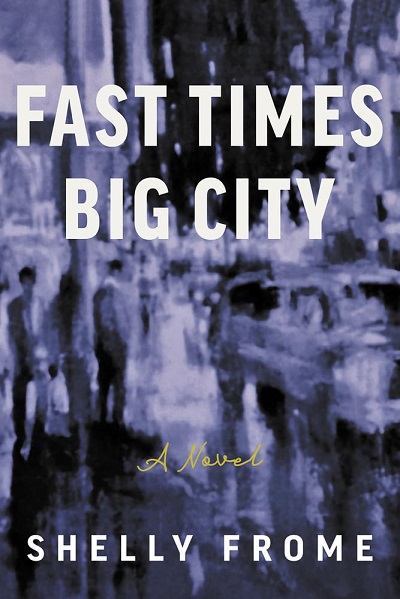
Blog Tour: Guest Review & Excerpt from Fast Time, Big City by Shelly Frome

Fast Times Big City by Shelly FromeFast Times Big City by Shelly Frome

Publisher:  Boutique of Quality Books (Feb 6, 2024) 
Category: Manhattan Mystery 
Tour dates: February 2-29, 2024 
ISBN: ‎ 979-8886330267 
Available in Print and ebook, Approx. 330 pages Fast Times Big City

Description Fast Times Big City by Shelly Frome

In a bind, Bud Palmer finds himself at the crossroads when just about everything was on the verge. Like most people, Bud Palmer felt this was just another day. Though the era was drawing to a close, he assumed his life as a sports columnist in the subtropics, in keeping with the benign fifties itself, would go on as predictable as ever. But that particular autumn morning he was thrust into a caper that was totally beyond him, forced him to leave Miami and take the train to Manhattan, and suddenly found everything in this restless "Big Apple" was up for grabs, on the brink, at a dicey turning point.

We have a guest review from Gud Reader. Enjoy:

Fast Times, Big City- A book review by Gud Reader

Shelly Frome's engrossing mystery book "Fast Times, Big City" transports readers to the turbulent and uncertain late 1950s. The narrative centers on Bud Palmer, a Miami sports columnist whose life unexpectedly changes when he gets entangled in a convoluted scheme. Bud finds himself in a world where everything is up for grabs after being forced to leave his cozy subtropics for the busy streets of Manhattan.

This novel masterfully captures the essence of the era, blending historical authenticity with a gripping narrative. Frome's writing is both evocative and engaging, drawing readers into the vibrant and sometimes seedy atmosphere of New York City. The characters are well-developed, with Bud's journey of self-discovery and adaptation to his new surroundings forming the heart of the story.

As Bud navigates through the challenges and dangers of the big city, he encounters a diverse cast of characters, each with their own agendas and secrets. The plot is intricately woven, with twists and turns that keep the reader guessing until the very end. Frome's attention to detail and skillful storytelling make "Fast Times, Big City" a must-read for fans of mystery and historical fiction alike. Worth my five stars!!


Here is a sneak peek:


Stella sipped some more wine and, competing with the group in analysis shouting at one another, raised her voice a bit, saying, “While we’re on the subject, what TV shows do you watch in Miami?”

Raising his voice as well, Bud said, “I hardly ever watch it. But my sister’s got a brand new Philco. She tunes into shows like Father Knows Best, I Love Lucy, Ozzie and Harriet and the Colgate Comedy Hour.”

“Of course. All harmless, avoiding any hint of reality. During the commercial break, housewives are offered frost-free refrigerators, freezers, laundromats and clock radios to keep them sedated. However, when word slipped out about programs like Playhouse 90, Studio One, the U.S. Steel Hour and so forth—live, shot on location in New York . . .”

She paused for a moment and nodded. “Ah yes, New York. Like a lady carnival barker, enticing, promising endless opportunities for the starry-eyed.”

Smiling, pausing once again and then adding, “Seekers get on the buses and trains before they too turn into Ozzie and Harriet. Willing to learn and catch the brass ring.”

 Her words were lively but her tone remained as casual as referring to new ice cream flavors at Howard Johnsons. Then her slender body rose. She peered down on him and said, “Tell you what. I’ve got to go feed Zelda my Persian cat and brush up on a reading for a new play. Where are you staying?”

“Got a room at the New Yorker.”

“Perfect, the hotel that features the most TV sets. As it happens, my friend Constance has the lead on Naked City at nine tonight. Think you can stay awake that long and tune into Channel Four? As I was saying, these shows are live, one shot and they’re gone, vanished into thin air.”

“But why?”

“Then forget it. How can anyone from Miami who knows nothing of live, deep-delving  TV,  rushing up here for some hidden motive, possibly be worth my time?”

She walked away. Bud held still as long as he could, rose up and quickly caught up to her, willing to latch onto any lead. “Okay okay, what’s the deal? Anything within reason.”

Pausing at the front door, taking her sweet time, she turned back to him. “Like everything else . . . ?”

“Bud. Just make it Bud.”

 “Like everything else, Bud, it depends upon the spirit of the moment. The quest for truth apart from all the masks and reaching for the brass ring.”

“I hear you,” Bud said, although this could be all a snag leading him nowhere.

Nodding, she broke into an all-knowing smile.

The upshot was, Bud was to key on the realities, meet her at ten the next morning at the Automat at Times Square which was within easy walking distance from his hotel. She happened to be making the rounds of casting agents in the vicinity after eleven. They’d have coffee. Provided he’d had a glimmering of what she was talking about, she’d provide him with a possible way of getting in touch with the starry-eyed young lady in question as part of her never-ending crusade.

However, if it was all beyond him, if he didn’t appreciate what Constance had to offer, it simply wasn’t worth her time.

He nodded again, still having no idea what the kicker was, followed her out, thanked Carmen who was greeting new revelers, and wished her all the best. Carmen, in turn, gave him a dirty look.

Outside, before parting ways, Stella smiled and said, “Are you sure you want to go ahead with this?”  

“If it gets me on the right wavelength, you bet.”

As she drifted off, he felt emboldened, as if he might be getting somewhere. But as the streetlamps flicked on and he neared the IRT Christopher Street stop in the late autumnal chill, he began to have second thoughts. Stella Parsons might just be playing him for her own amusement. Bud was totally out of his element and despite his track record as a sharp sports reporter was truly unfit for this venture all along no matter how hard he tried to make the best of it.


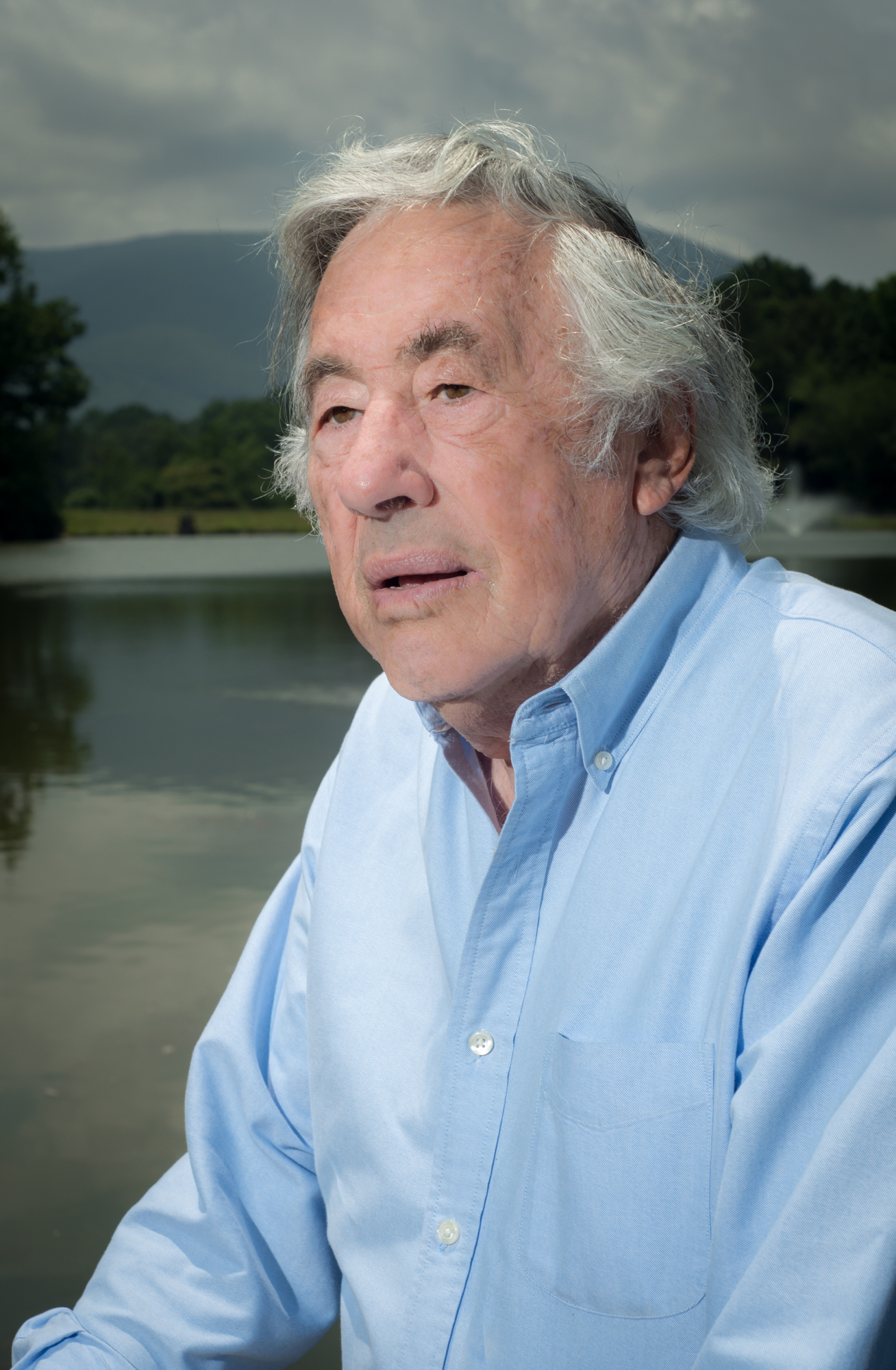
Shelly FromeAbout Shelly Frome

Award winning author, Shelly Frome is a member of Mystery Writers of America, a professor of dramatic arts emeritus at UConn, a former professional actor, and a writer of crime novels and books on theater and film. He also is a features writer for Gannett Publications. His fiction includes Sun Dance for Andy Horn, Lilac Moon, Twilight of the Drifter, Tinseltown Riff, Murder Run, Moon Games, The Secluded Village Murders and Miranda and the D-Day Caper. Among his works of non-fiction are The Actors Studio: A History, a guide to playwriting and one on screenwriting, Shadow of the Gypsy is his latest foray into the world of crime and the amateur sleuth. He lives in Black Mountain, North Carolina. Website: http://www.shellyfrome.com/ Facebook: https://www.facebook.com/shellyfrome Twitter: https://twitter.com/shellyFrome

Buy Fast Time Big City by Shelly Frome

Amazon BarnesandNoble BookShop.org

Giveaway Fast Times Big City by Shelly Frome

This giveaway is for 2 print or ebook copies, open to the U.S. and Canada only. This giveaway ends on March 26, 2024 midnight, pacific time. Entries accepted via Rafflecopter only. a Rafflecopter giveaway

Follow Fast Times Big City by Shelly Frome

Teddy Rose Book Reviews Plus Feb 26 Excerpt Liam Goodreads Feb 27 Review Leslie StoreyBook Reviews Feb 29 Guest Review- Nora & Excerpt BookGirl Goodreads Amazon Mar 1 Review Kari From the TBR Pile Mar 6 Guest Review Gud Reader & Excerpt Dawn Bound 4 Escape Mar 7 Guest Review Sal Gracie  Goodreads Mar 8 Review Bee BookPleasures.com Mar 11 Review Linda Lu Goodreads Mar 12 Review Suzie My Tangled Skeins Book Reviews Mar 13 Review & Interview Denise Amazon Goodreads Mar 14 Review Kathleen Celticlady's Reviews Mar 15 Guest Review Laura & Excerpt Mike Goodreads Mar 18 Review Teddy Rose Book Reviews Plus Mar 19 Guest Review-Mark Donna Amazon Goodreads Mar 21 Review Amy Looks, Hooks, Books Mar 22 Review Ellen Goodreads Mar 25 Review Fast Times Big City by Shelly Frome