Title: Guarded Series: Boston Renegades Author: Eden Sloane Release: October 20, 2026 Goodreads: https://t.ly/6RZRJ Bookbub: https://t.ly/JeiyQ Cover Design: Talina with Bookin’ It Designs Promo Graphics Designer: @hercozybookshelf! Genre/Tropes: ●Hockey
Romance ●Fake
Marriage ●Morally
Grey Heroine ●Single
Dad ●Bookish
Hero ●Found
Family NHL goalie Sebastian Voss can stop a
hundred-mile-an-hour slapshot. Convincing a judge he deserves custody of his
daughter? That’s proving considerably harder. His solution? A fake marriage to the
woman he’s already falling for. For three years, Sebastian has fought
to keep the little girl who means everything to him. But a steady stream of
headlines portraying him as hockey’s favorite womanizing disaster has left his
reputation in tatters and his custody case hanging by a thread. If Sebastian wants to prove he can
offer his daughter the stable home she deserves, Kat Morrison is his best shot. She’s smart, beautiful, inexplicably
unimpressed by his charm, and the first woman in years who makes Sebastian want
something for himself. Asking a woman he barely knows to become his wife is
probably insane. Falling for her before she ever says yes is definitely worse. But if putting a ring on Kat’s finger
gives Sebastian a better chance at keeping his daughter, he’ll risk his heart
without hesitation. Kat knows saying yes is a mistake. Not because she doesn’t love him. Because she does. For three years, Kat has been forced
to write the lies destroying Sebastian’s reputation, blackmailed into obedience
by the one man who holds her brother’s future in his hands. But now Kat is living in his house,
wearing his ring, loving his daughter, and falling deeper for the family she
was supposed to help destroy. Somewhere between stolen kisses, tangled sheets,
and building a life together, their fake marriage starts feeling dangerously
like forever. Except forever has an expiration date
when it’s built on a secret. And Kat knows that when Sebastian
discovers the truth, she may lose the only man she’s ever loved. Buys Links (Kindle Unlimited): Universal: http://books2read.com/u/4NKgpG Amazon US: https://www.amazon.com/gp/product/B0HD9RGTKN Amazon CA: https://www.amazon.ca/gp/product/B0HD9RGTKN Amazon UK: https://www.amazon.co.uk/gp/product/B0HD9RGTKN Amazon AU: https://www.amazon.com.au/gp/product/B0HD9RGTKN My thoughts:
Guarded is the first book in the Boston Renegades series. This one is Kat and Sebastian's story. The book was definitely one that I read straight through into the night. I really enjoyed the relationship between the couple and how it evolved. I really felt for Kat and her predicament. I was really rooting for her to figure out how to get herself out of it. I also loved the friendships that Sebastian had with his teammates and sister. The third act of this book put me through an major emotional wringer, but it was worth it for the HEA. I highly recommend it and look forward to the next book in the series.
An amnesic psychiatrist returns to the hospital where she was institutionalized as a teen to find answers, perfect for fans of The Silent Patient and Shutter Island.
Forgetting can be dangerous. Remembering can be fatal.
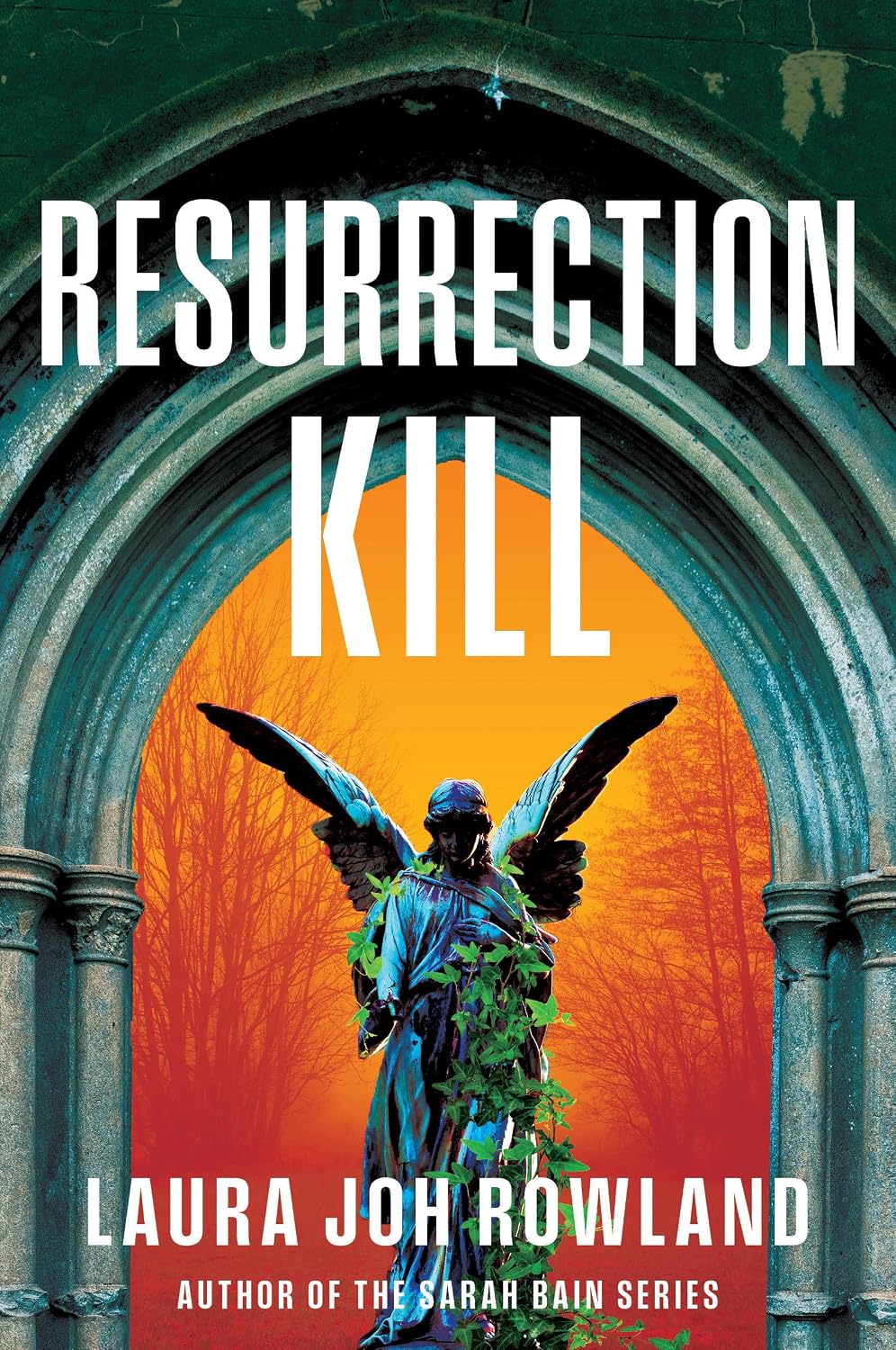
New York State, 1953. Dr. Claire Kendall is a psychiatrist-in-training at Resurrection Kill Hospital, a luxurious private and isolated mental institution for the wealthy. But under her mask of professionalism, Claire has a secret: She was a patient at the hospital when she was fourteen.
With gaps in her memory, Claire is determined to discover what really happened the summer she was institutionalized… even if it means uncovering the dangerous secrets hiding at Resurrection Kill. Before long, Claire takes a special interest in a teenage patient, Rory Kirkpatrick, a free-spirited girl who is also determined to uncover Resurrection Kill Hospital’s dark past. Claire indulges Rory’s rebellious nature, hoping to glean clues that might help in her own search for the truth.
But the hunt for answers triggers flashbacks of Claire’s painful childhood, her father’s cruelty, her mother’s alcoholism, her beloved older brother’s death. The deeper she probes her own past, the more she remembers about the summer that changed everything. And as she delves deeper into her own mind, she’ll come to find that her sanity grows more fragile by the day and that some secrets are meant to stay buried. She’ll discover that remembering may come at the cost of her life.
Praise for Resurrection Kill:
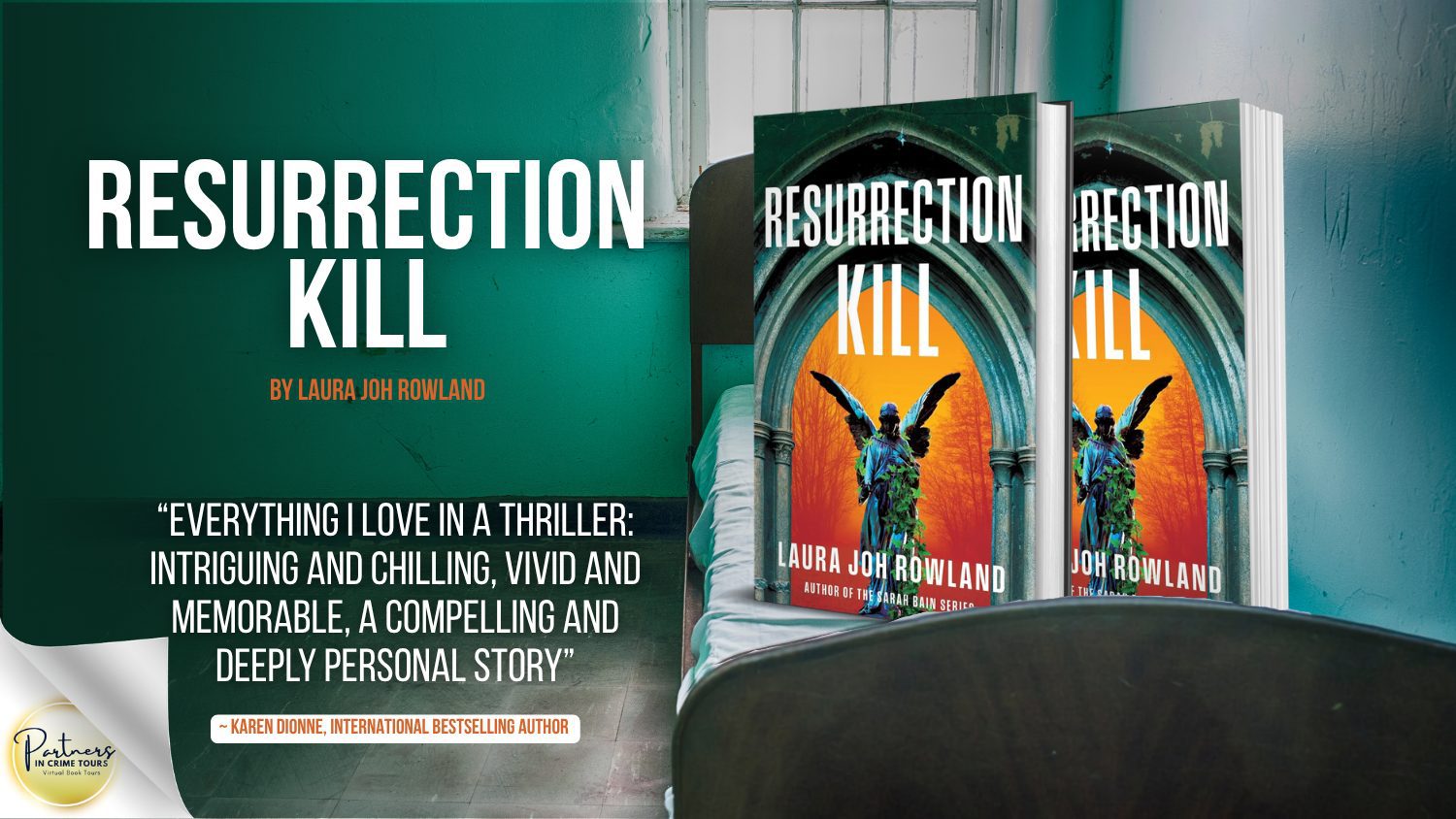
"Resurrection Kill by Laura Joh Rowland is everything I love in a thriller: intriguing and chilling, vivid and memorable, a compelling and deeply personal story about one woman's search for answers in an era when women were committed to mental hospitals for virtually anything that was outside the cultural norm. That Resurrection Kill Hospital is an upscale facility for the super rich only makes the procedures the women are subjected to all the more barbaric. Claire's courage and fearlessness under increasingly dangerous circumstances made me want to stand up and cheer. I loved this book!" ~ Karen Dionne, author of #1 international bestseller The Marsh King's Daughter and The Wicked Sister
In Resurrection Kill, Claire begins her residency at a mental institution. She could have gone to a more prestigious institution, but she has ulterior motives. She was a patient at this place years before, but cannot remember much about her time or why she was there. Her key goal is to find the truth while concealing her true identity from her colleagues.
I thought this was an enjoyable mystery. I also liked the setting. It made me realize how far the issues surrounding the treatment of mental health has come and how far we still have to go. I loved Claire's drive to figure out what happened to her when she was a patient. There were some great twists and I did not call the reveal. My only real issue with the story was the pacing. Some parts of the book felt a little slow to me. Despite that, I would recommend reading it!
Read an excerpt:
New York State, July 1953
A siren blares through the loudspeaker in the conference room where I sit with the four other new psychiatrists. A staticky voice repeats, “Code 1, East Drive.” Startled, we look to the man at the head of the table.
Tall, dignified, and silver-haired, Superintendent Adrian Van Pelt raises his voice over the siren. “Welcome to your first day as residents at Resurrection Kill Hospital.” His manner is calm, faintly amused, his black suit impeccably tailored. “You might as well see what you’re getting into.”
Beckoning, he strides out the door. We hurry after him along the wide hall, down the grand staircase. In the foyer, one resident catches up with Superintendent Van Pelt and opens the door. With his blond crewcut and conventional handsomeness, he looks like a movie star. The only other woman besides myself trots at his heels. She’s bespectacled, her reddish-brown hair coiled in a bun, and her skirt stretches across wide hips. I lag behind the other men. One is slender and older than the rest of us, his hairline receding; shadows underscore his deep-set eyes. The other looks Japanese, with straight black hair and an upright posture that adds to his less than average height. My colleagues are eager beavers, but I hesitate. I should join the front of the charge because first impressions are lasting, and my career depends on the success of my residency; I mustn’t look timid. But I need to avoid close attention.
This is my colleagues’ first day here. But not mine.
Twelve years ago, when I was fourteen, I was a patient at Resurrection Kill Hospital.
The people with me don’t know. Nobody must ever know.
The heavy carved door set with stained glass starts to swing shut in my face. The others are already outside, and the Japanese-looking man holds it open for me. He’s the only person who noticed that I’ve lagged behind. I take a deep breath, walk through the door, nod my thanks at him, and emerge into bright sunshine. The warm summer air smells of roses and freshly cut grass. I pause on the steps of the mansion that serves as the administration building. Around me as far as I can see spreads the hospital’s campus, located five miles from Resurrection—the town from which it took its name—and about fifty miles upstate from New York City. Kill is the Dutch word for a stream, and the campus nestles in a curve of Resurrection Kill, a tributary of the Hudson River. Founded in 1885, the hospital was built by an architect inspired by Frederick Law Olmstead, designer of Central Park and other landmark sites. Buildings constructed mostly in the nineteenth century, in various styles, cluster together at the middle of a hundred and thirty acres of gently rolling hills landscaped with gardens and surrounded by woods. I don’t recognize anything, which disappoints but doesn’t surprise me.
The five months I spent here in 1941 are a black void in my memory, lit only by occasional, disturbing flashbacks. I returned to complete my training but also to reconstruct my past. I became a psychiatrist because I want to help the mentally ill, but I also need to find out what happened to me here and why I forgot it all.
I catch up with Superintendent Van Pelt and the other residents on the main road that winds through the campus. Red-brick buildings from the Victorian era, separated by lawns and gardens, line the road. People who look to be patients or visitors stroll in the gardens. Yesterday, I had planned to arrive in time to move into my quarters, take a walk before dark, and search for scenes that evoke memories, but the drive from the city took longer than I expected due to heavy traffic, and my car had a flat tire. After getting the car towed and the tire fixed at a garage, I reached the hospital too late to explore the campus. Now I lift my gaze to the treetops, to the slate roofs of other buildings, to the smokestacks that rise from a power plant to the cloudless blue sky. It’s as if I’ve never been here before. I focus on Superintendent Van Pelt, at the head of our little parade. He moves with a rapid, athletic gait, as if the passage of his sixty years has diminished neither his strength nor his energy. I think I remember him, but perhaps my mind is filling the void with false memories.
The sounds of automobile horns and racing engines interrupt my thoughts. A male voice shouts through a megaphone: “Stop!” We round a curve in the road. A dark green pickup truck speeds toward us, followed by a white sedan. A second white sedan comes from the opposite direction, on a collision course with the truck. I gasp, bracing myself for the crash. The other residents exclaim in alarm. Brakes screech as the second sedan slews around to block the road. The green truck veers to avoid hitting the sedan and comes straight at us. We scatter out of its way. The truck jumps the curb, rolls over grass, and crunches to a halt. Rakes, shovels, and buckets rattle in its bed. On the road, the first sedan stops near the second. Both have the hospital’s insignia—an oak tree spreading limbs over the letters RKH—and the word “Security” printed in green on the doors. The drivers, men clad in dark green uniforms, spring from the cars. They rush to the truck, whose front wheels have plowed over a ring of stones and low bushes that surround a flowerbed. The truck’s back wheels spin, churning up grass and dirt as its driver guns the engine. The flowerbed, bright with pink, mauve, and blue hydrangeas, is set in the lawn in the curve of a semicircular drive. The drive fronts a building, three stories of red brick and white-framed windows, the roof ornate with gables, dormers, and chimneys. A sign outside reads, “Serenity House.”
Could it be where I lived when I was a patient?
Nurses in white dresses and caps and orderlies in blue uniforms run out of the building and flock around the truck. The security guards are trying to open the truck’s doors, which are locked. One guard says, “It’s Rosemary Kirkpatrick. She sneaked out of Haven House and stole a groundskeeper’s truck.”
“Rosemary is a problem patient,” Superintendent Van Pelt informs our band of residents.
A guard strikes the truck’s passenger side window with his truncheon. The glass breaks. A shrill voice screams from inside the vehicle: “Go away, you bastards!”
The truck’s engine revs; the wheels spin faster, in vain. The guard reaches through the broken window, unlocks and opens the door. The engine dies as he turns the key in the ignition. He and his partner reach inside the truck and pull Rosemary Kirkpatrick out. She flails so wildly that all I can see of her is a tangle of thin limbs, pink garment, and long, dark hair. Shrieking curses that would put a sailor to shame, she kicks one guard in the groin. He howls and doubles over. She pulls free of the other guard, leaving the ripped sleeve of her dress in his hands, and runs . . . straight to me.
My heart clenches. Rosemary’s face is small, her features delicate, her complexion pale within the frame of unruly black hair. She’s just a girl, no more than sixteen or seventeen.
Everyone else is in motion—guards, nurses, and orderlies chasing Rosemary; the other residents backing away from her; Superintendent Van Pelt raising his hand, opening his mouth to issue commands. But Rosemary’s gaze snares mine, and I’m rooted to the spot. It’s as if she’s singled me out of the crowd, with some primal instinct that sensed—what? A sympathetic ally? A fellow mental case? She clutches my arms, her fingers hard against the gabardine of my suit jacket, digging into my flesh. Her eyes are wide, startlingly green, and fringed with long black lashes.
“Help me!” she cries.
I instinctively grasp her arms—whether to break her hold on me or to try to soothe her, I don’t know. Her arms are thin but strong. Her anguish strikes a deep chord in me.
“Get me out of here!” she begs. “Please!”
My lips move involuntarily, and my mind echoes with the sound of my own voice crying out the same words. An eerie shiver ripples through me. The scene around me blurs, and my heart drums hard and fast through a tide of vertigo. Locked together, Rosemary and I seem to spin a hundred and eighty degrees, switching places. The nurses and orderlies are after me, not her. I see us from a vantage point high above—her dark-haired and half-naked in the tatters of her pink dress; myself with a brown pageboy, trim gray suit, and black pumps. I forget which of us is the doctor, which is the fugitive inmate. A flash of memory like a lightning bolt illuminates the dark void.
I once accosted some stranger in my own desperate attempt to escape this hospital.
The orderlies yank Rosemary away from me, and our hands cling together for one last instant. Mouth wide with terror, she looks like she’s drowning and a riptide is pulling her away from her rescuer. I feel the same expression on my own face, as if we are mirror images. Please don’t let them take me back there! I don’t want to go!
“Calm down, Rosemary, that’s a good girl,” Superintendent Van Pelt says, his gentle, firm tone laced with condescending tolerance.
Rosemary screams as the orderlies wrestle her to the ground. A guard speaks into a walkie-talkie. The other residents look on with stoic expressions that mask whatever excitement or alarm they may be feeling. I rearrange my own face to match theirs as I take deep breaths to quell my panic.
The superintendent walks over to the fray, confident as a zookeeper accustomed to wild beasts. A nurse places a hypodermic syringe in his hand. While the orderlies hold Rosemary down, he stabs the needle into her thigh and pushes the plunger. Her screams dwindle to whimpers; the fight goes out of her. Her eyes roll up inside her head, and her body relaxes into drugged sleep. The orderlies step back, panting and wiping sweat off their brows. Superintendent Van Pelt gives the syringe back to the nurse and dusts off his hands. An ambulance arrives. The attendants bring a gurney, lift the unconscious Rosemary onto it, strap her down, and load her into the ambulance.
“I’ll see her back to the ward,” Superintendent Van Pelt tells our group of residents. “Wait for me in the conference room.”
He climbs into the passenger seat of the ambulance and rides away. We retrace our steps to the administration building, the handsome blond man first, the other woman a step behind him; then the thin older man; then the Japanese-looking man and me, walking together.
“Are you all right?” My companion sounds concerned; he noticed my distress.
My cheeks warm. The other residents seem oblivious, and I’m glad he spoke quietly and didn’t call their attention to me. “I’m fine.”
I’m shaken and trembling inside, but my voice is cool, calm, the product of training and discipline. I can’t afford to seem weak, lest the others shun me out of contempt. Triumph revives my strength. I’ve started to remember. Just as I’d hoped, coming back to Resurrection Kill Hospital has cracked open the void. After twelve years, light is shining through. I look from side to side and backward, eager to see what else might be revealed.
In the flowerbed that Rosemary Kirkpatrick drove the truck into is a statue of a woman. Her stone skin is green with moss, her face hidden by ivy. What would she see if the ivy were torn away? Would she rather remain blind and ignorant?
***
Excerpt from Resurrection Kill: A Novel by Laura Joh Rowland. Copyright 2026 by Laura Joh Rowland. Reproduced with permission from Laura Joh Rowland. All rights reserved.
Author Bio:
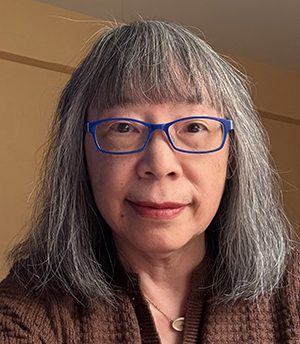
Laura Joh Rowland is the award-winning author of the Sarah Bain Victorian Mystery series, the samurai detective Sano Ichirō mystery series set in seventeenth-century Japan, and a historical suspense series starring Charlotte Brontë. Her work has been published in twenty-one countries; nominated for the Anthony Award, the Hammett Prize, and the Barnes & Noble Discover Great New Writers Award; won RT Magazine's Reader's Choice Award; and been included in the Wall Street Journal's list of the five best historical mystery novels. Laura holds a bachelor of science and a master of public health degree from the University of Michigan. She is a former aerospace scientist, a painter, and a cartoonist. She lives in New York City with her husband Marty.
Title:
Lost Valley - Lost Innocence Author:
Ken Tipton Genre:
Memoir Sub-genre:
Sexual Assault/True Crime Language:English Pages:
365 Paperback
ISBN: 979-8234067685 Publisher:
TBRIS Media, Inc. Publication
Date: June 22, 2026 Price:
Hardcover $27.99, Paperback $18.99, Kindle $7.99, FREE with Kindle Unlimited Two best
friends. One hidden network. A childhood stolen under the cover of Scouting. From
1964 to 1967, Kenny Tipton and Greg Connor were barely teenagers when men they
had been taught to trust groomed and sexually exploited them through Boy Scout
camps, trips, and activities. What
began at Lost Valley Boy Scout Camp outside St. Louis grew into an organized
network that carried the boys through more than twenty states and into the
hands of businessmen, law-enforcement officers, politicians, priests,
educators, and other powerful men. To
survive, Kenny and Greg depended on each other. They made rules, kept secret
records, negotiated with predators, and used intelligence, loyalty, and dark
humor to hold on to some measure of control. As the danger escalated, they
became caught in blackmail, betrayal, violence, and crimes that would haunt
Kenny for decades. Lost
Valley - Lost Innocence is Ken Tipton's firsthand account of stolen childhoods,
institutional failure, buried secrets, and the lifelong consequences of
survival. But at
its heart is something the men who exploited them could not take away: the
friendship between two boys who protected one another when the adults around
them would not. Decades
later, Ken finally breaks the silence. Told
with brutal honesty and unexpected humor, this is a survivor memoir about
friendship, resilience, guilt, and the courage required to confront the past. Some
stories are difficult to believe because they are too horrifying to imagine. This one
happened. Lost
Valley - Lost Innocence is available at Amazon. Enjoy this interview with the author:
You first put this story on paper in 1988, but the memoir
wasn't fully published until 2026. For survivors who feel frozen or unable to
share their own stories, what did that decades-long gap teach you about
patience, timing, and waiting until you were ready?
The biggest lesson was that being able to write something
down and being ready to let people read it are two very different things.
When I first wrote the story in 1988, I gave the manuscript
to my attorney with instructions that it could be released only after my death.
I wanted the truth preserved, but I was terrified of what my family would think
of me. After my first grandson was born, that fear became so strong that I
destroyed the manuscript. Those decades were not spent patiently polishing a
book. Much of that time, I was trying to find the courage to let anyone know
what had happened.
In November 2010, watching Oprah’s two-part program
featuring 200 male survivors and Tyler Perry helped me understand that I was
not alone. I started writing again from the beginning and my wife promised not
to release it until after I passed. Later, the Boy Scouts bankruptcy and more
than 82,000 abuse claims helped push me toward publishing while I was still
alive. Other survivors were stepping forward, and I wanted my story to help
someone the way their stories had helped me.
I would never tell another survivor, “You should have spoken
sooner.” I know how heavy those words can be. You do not owe the world a public
account of your most painful experiences. Sharing might mean telling one person
you trust, not writing a book.
For me, being ready did not mean the fear had disappeared.
It meant that helping someone else feel less alone had become more important to
me than keeping my own story hidden.
When you tried to speak out as a Scoutmaster in 1988, the
St. Louis Boy Scout Council blocked you. Many survivors face immediate denial
or silencing from the institutions they trust. How did you maintain your grasp
on the truth when a massive organization was trying to overwrite your reality?
Their refusal to hear the truth did not change what Greg and
I had lived through. But it certainly made speaking about it harder.
When I returned to Scouting as a Scout leader, I wanted to
help protect children. My proposal was practical: let me talk to Scouts about
grooming, special attention, gifts, and demands for secrecy. I thought the
organization would welcome an opportunity to help boys recognize the dangers we
had not understood. Instead, a Council representative told me, as I recall in
the book, “Such delicate matters belong at home, not in a public forum.”
What hurt was knowing that I had offered something that
might help a child, and they had turned it away. I understood that response as
another demand for silence, not a reason to doubt what had happened.
Writing became my way of answering. They could reject my
proposal, but I could still put my experience on paper. That did not make me
fearless—I still struggled with shame and with the thought of my family reading
it—but it gave the truth somewhere to exist outside my own head.
The distinction I would make for another survivor is this:
someone’s refusal to listen is not proof that you are wrong. An institution’s
reputation does not give it the authority to decide what you experienced.
You and Greg managed to reclaim a sense of agency by
negotiating with predators and keeping secret records. For survivors who often
feel completely powerless when looking back at their childhoods, how does it
feel to recognize that even as children, you possessed immense strategic
intelligence and resilience?
I feel both pride and grief. I can recognize how resourceful
we were while wishing desperately that we had never needed to be.
Greg and I made rules, kept records, negotiated whatever we
thought we could negotiate, and used humor to hold on to something that still
belonged to us. Our friendship mattered enormously. We were trying to look out
for each other in circumstances neither of us should ever have faced.
But I want to be very clear: finding a little control inside
an abusive situation is not the same as being free to choose that situation. We
were not equal partners negotiating with other adults. We were children dealing
with adults who had power over us. Our intelligence did not make us responsible
for their behavior, and our attempts to survive did not turn exploitation into
consent.
Looking back, I want to give those boys more compassion and
less blame. I want readers to see our loyalty, our humor, and the people we
were—not only what was done to us.
I also would not want another survivor to read this and
think, “I didn’t keep records or come up with a plan, so I wasn’t strong.” This
is not a contest over who resisted best. A child does not have to fight back,
gather evidence, or outsmart an adult to deserve protection. That
responsibility belonged to the adults.
Your book touches on how the blackmail, betrayal, and
trauma impacted you for decades. What does the day-to-day work of living with
complex trauma look like for you now, and how do you navigate the seasons when
the past feels closer than the present?
I would not describe it as reaching a point where everything
is neatly resolved. Putting the story into a book does not mean putting the
past away forever.
Faith and determination have been central to how I have kept
going. I have never approached faith as asking God to fix everything for me. I
prayed for the strength to figure out what I needed to do, and then I had to do
the work. I earned my successes, but believing that God was in my corner and
could guide me spiritually helped me keep moving on the right path.
The balance I aim for now is acknowledging what happened
without allowing it to become the only thing my life is about. I am still a
writer, producer, and director. I still have stories to tell and projects I
care about. I want room for laughter, too. Humor does not mean I am taking the
abuse lightly; it means the abuse does not get to take every other part of me.
When the past feels close, the question I want to ask myself
is not, “Why aren’t you over this?” It is, “What can you do with today?”
Helping other survivors feel less alone gives this work
purpose. But I also want a life beyond explaining what happened to me. I
survived, and I want to keep living—not just keep revisiting how I survived.
Will there be more books from you in the future?
Possibly. I certainly have more stories to tell, but my
immediate focus is giving Lost Valley — Lost Innocence the opportunity
to reach the people who need it.
I am working on the audiobook and working toward adapting
the memoir into a limited streaming series. That longer format would give us
room to show Greg and me as whole people, with friendship, humor, hopes, and
lives beyond the abuse. It is a project I am pursuing, not an announced
production.
I am open to another book, but I do not want to promise a
title or a publication date before I know what that book should be. For now,
this story still has a great deal of work to do. My hope is that someone who
has spent years believing they were alone will encounter it and realize they
were not.
About the author:
Ken Tipton is a serial entrepreneur, author, composer,
screenwriter, award-winning filmmaker, and Air Force veteran whose life has
taken him from building unconventional businesses and producing films to
confronting a childhood history he kept largely buried for decades.
His memoir, Lost Valley - Lost Innocence, tells the true
story of Tipton and his best friend, Greg Connor, who were groomed and sexually
exploited as boys through a network connected to their experiences in Scouting
during the 1960s. Told with candor, emotional honesty, and unexpected humor,
the book examines childhood abuse, institutional betrayal, friendship,
survival, and the consequences that can follow victims long after the abuse
itself has ended.
Tipton has spent much of his life creating—building
businesses, developing film and television projects, writing screenplays, and
telling stories drawn from extraordinary experiences. In his seventies, he
turned that storytelling toward the most difficult subject of all: his own
past.
Through Lost Valley - Lost Innocence, Tipton hopes not only
to document what happened, but also to give voice to survivors who spent years
or decades believing that silence was their only option.
He lives in California with his wife, Darlene, and continues
to write and develop new creative projects.
Ken’s latest book is Lost Valley - Lost Innocence.
Visit his website at https://lostvalleybook.com/
Connect with him on social media at: Facebook:https://www.facebook.com/LostValleyFilm Instagram:
https://www.instagram.com/lostvalleybook BookBub: https://www.bookbub.com/profile/ken-tipton YouTube: https://www.youtube.com/@lostvalleybook Substack: https://lostvalleybook.substack.com/
Author: Toni Anderson Publisher: Toni Anderson, Inc Publication Date: September 2026
When a fugitive accused of murdering his ex-wife disappears into the Montana backcountry with his nine-year-old daughter, FBI Hostage Rescue Team sniper Sebastian Black leads an intensive manhunt, battling snowstorms and brutal terrain in a race against the clock.
National Park Service ranger and search-and-rescue specialist Nora Deacon knows the mountains better than anyone. Alongside her K9 partner, Chance, she’s determined to find the missing girl. Nora is achingly familiar with what can happen when a child falls into the wrong hands.
As the search narrows, Sebastian and Nora are forced to work together in a fight for survival as much as a rescue operation. The closer they get to their target, the more dangerous the situation becomes—and the harder it is to ignore the attraction burning between them.
With a blizzard closing in, a desperate fugitive growing increasingly unstable, and a young girl’s life hanging in the balance, they’ll have to risk everything to bring her home alive—even if it means confronting secrets they’ve both worked hard to bury.
Cold Rage is the 8th book in the Cold Justice: Most Wanted series. This one is Sebastian's story. He and the rest of the team join up with Nora, a National Park ranger who specializes in search and rescue with her dog Chance. They are tasked with looking for a murderer who has fled into the mountains and taken his daughter with him.
This a wonderful addition to the series. The tension and action is elevated throughout the entire book. I definitely was on the edge of my seat. I also can't remember the last time I felt cold reading a book. The author really knows how to create atmosphere! I loved Sebastian and Nora together. Nora has a tragic past and has worked hard to move past it all to become who she is today. Sebastian also had a pretty crappy past. For a couple that never wanted to have a relationship, these two just fit so well together. While it was a little quick, their HEA was totally believable. I highly recommend this one. I can't wait to see which team member gets the next story!
From
USA Today bestselling author Willow Aster comes a heartfelt
second-chance romance about a cowboy and a single mom wrangling their
tragic past into hope for the future on a proud Wyoming ranch.
A car
accident on prom night changes everything for eighteen-year-old Maverick
Harrington. In a flash, he loses two best friends: one who dies in the
crash, the other who carries the blame. Finding hate easier than grief,
Maverick’s heart slowly hardens. Now twelve years later, he runs Harrington
Ranch, bearing the family name on his shoulders and wearing the past like a
brand on his heart.
Iris
Sullivan didn’t have the sense to leave Ironwood, where loyalty is law.
She’s raised her son in the same town that turned its back on her,
surviving on stubborn resilience as a single mother. When a golden
opportunity takes her back to Harrington Ranch, she comes face-to-face with
the man who once said she was dead to him. But forced proximity has a way
of weakening defenses.
As
old secrets and new sparks ignite, Maverick starts to see the woman behind
the whispers—and the twelve-year-old boy whose legacy he can’t ignore.
Download
today or read and listen for FREE with Kindle Unlimited
Narrated
by: Sean Masters & Chloe Ryan
My thoughts:
Savage Heart is the first book in the Harrington Ranch series. This one involves Maverick and Iris and them finally getting a second chance. I have mixed feelings about this book. I loved watching Maverick and Iris find their friendship again and have that turn into love. I also did like that the forgiveness from Iris wasn't immediate. The relationship that Maverick develops with her son was very sweet.
What I didn't love was the years of disdain and abuse that Iris endured all because people couldn't ask simple questions. I had a hard time liking anyone in the book for making her go through that all with no proof. That includes all of Maverick's family, except his mom. She was amazing. Despite this issue, I still enjoyed the romance and loved the ending. I can't wait for the next book.
Jingle Bells, Wedding Vows Paula Dombrowiak (Hollow Reign, #3) Publication date: October 6th 2026 Genres: Adult, Contemporary, Holiday, Romance
He’s the uptight rockstar directing the music for my burlesque Christmas show, and driving the grumpy maestro to throw his sheet music is my favorite hobby.
Then we wake up married, and he can’t remember a single thing about our night together.
Theo Mercer is an arrogant control freak in rolled-up sleeves and glasses who thinks he can tame my headlining act. But on my stage, I call the shots. Beneath the falling stage snow, the friction between us is hot enough to burn the theater down.
When our accidental Vegas wedding explodes across the tabloids, Theo swallows his pride and drops to one knee to propose a holiday charade: play blissfully wedded—which means moving my insufferable new husband into my cramped studio apartment.
Forced proximity beneath the mistletoe turns our backstage feud into breathless passion, and behind closed doors, our fake marriage starts to feel dangerously real.
Except our vows have an expiration date. When the tinsel comes down on New Year’s, Theo has to leave.
He swears he’s coming back.
But I stopped believing in Christmas miracles a long time ago, after a string of men who never kept their word. If I let down my walls only to get burned by my fake husband… I won’t survive the fall.
Jingle Bells, Wedding Vows is Book 3 in the Hollow Reign Christmas Novellas, a series of interconnected, steamy holiday romances. Each book can be read as a standalone and features a guaranteed happily ever after.
Which would be a lot more convincing if I didn’t have the pleasure of knowing she’s a complete and utter menace in sequins and red lipstick who has spent the last couple of weeks driving me insane. The star of the Christmas show who argues with me about every note I wrote for her number. The woman who loves to push my buttons like no one I’ve ever met before.
Mara Delaney.
Fuck, fuck, fuck.
Do not tell me I did what I think I did.
My stomach drops as I lift the edge of the sheet and look down. Finding myself still in my boxers should be reassuring, but the relief is fleeting, swallowed almost immediately by a deeper sense of dread.
I turn my head toward Mara. The sheet has slipped just enough to expose the curve of her bare shoulder. I pinch the edge of the sheet to lift it.
Please don’t let her be naked. Please don’t let her be naked.
Fuck, she’s naked.
I don’t remember how I got here. Last night is a haze of disconnected pieces, and everything that matters is missing.
I ease out of bed with the stealth of a military operative trying not to set off a bomb. My shirt is draped over a velvet armchair, and I pull it on before anything else because I need at least one layer of dignity between me and whatever the hell happened last night. One of my Vans sits near the bathroom door. I shove my foot into it and search for the other, getting a good look at Mara’s apartment in the process.
I run a hand through my hair and pull it back to stare at it before my brain catches up to what I’m seeing.
There’s a gold band on my ring finger. Not the kind that comes out of a gumball machine.
What the actual fuck?
My gaze snaps to Mara.
I lean over the bed to see Mara’s hand curled loosely around the sheet, dark red polish chipped at the edges.
The ring on her finger matches mine.
This has to be a joke. Some elaborate, deeply unfunny prank, and when I find Casey, I’m going to kill him slowly, because somehow he’s responsible.
There’s a marriage certificate on the nightstand next to my phone.
Author Bio:
Paula Dombrowiak grew up in the suburbs of Chicago, Illinois but currently lives in Arizona. She is the author of Blood and Bone, her first adult romance novel which combines her love of music and imperfect relationships. Paula is a lifelong music junkie, whose wardrobe consists of band T-shirts and leggings which are perpetually covered in pet hair. She is a sucker for a redeemable villain, bad boys, and the tragically flawed. Music inspires her storytelling.
For more ways to learn about Paula and her books, check out her website: @www.pauladombrowiak.com
A Small Town, Enemies-to-Lovers Standalone Romance from USA
Today and Amazon #1 Bestselling Author, Laura Pavlov. Briar Sinclair is enemy number one.
She came to Blue Sky Bay with a multimillion-dollar plan and
one goal: to buy my restaurant.
Too bad it’s not for sale.
She’s pulled every stunt in the book to get my attention,
though I refuse to engage with a woman who came here to ruin my life—no matter
how relentless she is.
Unfortunately, my restaurant is the last thing standing in
the way of her powerful father’s approval. She’s determined to convince me that this is a good idea.
We can agree to disagree.
But that doesn’t mean I’m not enjoying the effort that she’s
putting in.
One minute she’s arguing with me about real estate, the next
she’s tripping outside my houseboat or falling asleep behind my restaurant
after working herself to exhaustion.
Did I mention the fact that she’s insanely beautiful.
I should hate her for what she’s trying to do. Instead, I
can’t stop noticing her pretty pink mouth or her sharp tongue.
The more we clash, the harder it becomes to remember that
she’s the enemy.
Because somewhere between the arguments, late nights, and
undeniable attraction—Briar Sinclair stopped feeling like the woman trying to
destroy my future…and she started feeling like she belonged in it.
Book Title: BEST IN MURDER (A Mac Faraday Mystery #15) by Lauren Carr Category: Adult Fiction (18 +) Genre: Mystery Publisher: Acorn Book Services Release date: Oct 13, 2026 Content Rating: PG-13 (Lauren Carr's books are murder mysteries, so there are murders involved. Occasionally, a murder will happen on stage. There is sexual content, but always behind closed doors. Some mild swearing (a hell or a damn few and far between). No F-bombs!
Book Title: ALTERED (JUSTIN WRIGHT SUSPENSE SERIES Book 1) by Rob Kaufman Category: Adult Fiction (18 +), 270 pages Genre: Psychological Thriller, Suspense Publisher: Rob Kaufman Release date: May 2023 Content Rating: PG-13 +M: ALTERED has a few profanities and alludes very subtly to abuse but never gets graphic or says the words. "Trauma" is used by Justin, the psychiatrist.
Book Description:
When Frank Devlin walks into Justin Wright's office, the renowned New York City psychiatrist decides to take on one of the most challenging cases of his career.
Justin is determined to help Frank, a young man with multiple personalities (“alters”), live a happier, more fulfilling life. Little does he know that Frank and his alters are secretly weaving themselves into Justin’s life in ways that will affect the Wright family forever.
A suspense-filled story driven by emotion, angst, and the ultimate revenge, “Altered” takes readers down a twisted path of uncertainty and mind games—leaving them shocked, heartbroken, and questioning what could possibly come next...
Alteredis the first book in the Justin Wright series. Justin is a psychiatrist who takes on a new patient named Frank. He quickly realizes that there is something unusual about Frank and diagnoses him with having multiple personalities.
I listened to the Audible version and I did enjoy the production. I thought the narrator did a really good job of changing voices for Frank and his alters. It really helped me orient myself to which alter was speaking. I did like the aspect of multiple personalities in the story. I found that part fascinating. I also thought the author handled the subject of family grief well.
While I did like the book, I didn't love it. I had a big issue that took away from my total enjoyment. What I could not get behind was one character's decision not to say anything about his boyfriend and the danger he could pose. It just didn't track for me especially when he was studying psychology himself. It took me out of the story because I could not suspend my disbelief. Despite that, I think this is a book worth trying out. I may continue with the series at a later date.
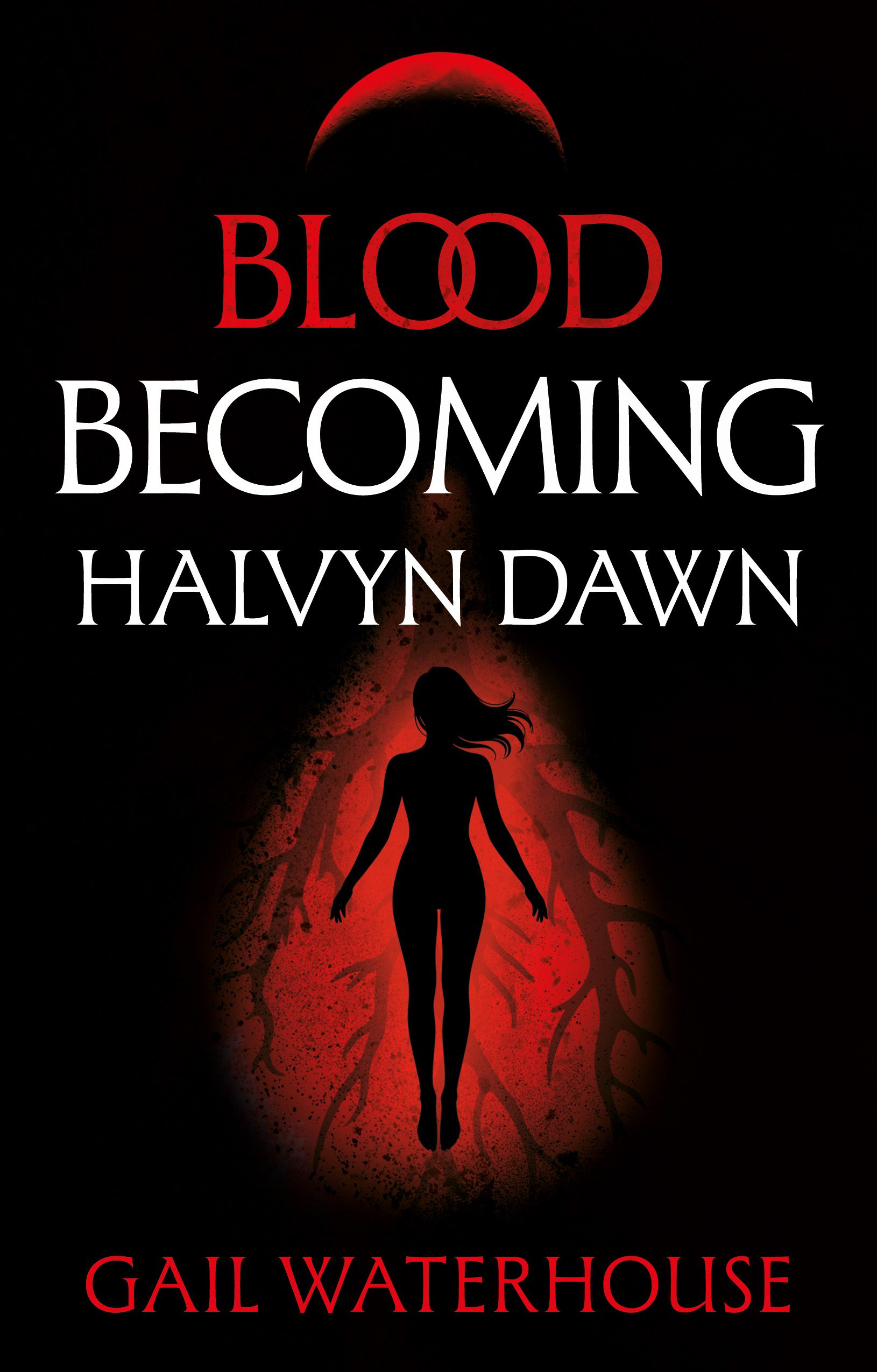
DCI Eleanor Moore is drawn into a series of brutal killings that defy explanation. As she follows the trail of evidence, she uncovers links between the crimes, the vaccine, and a shadowy conspiracy determined to control the future. The investigation becomes painfully personal when Eleanor realises a member of her own family may be entangled in the very secrets she is chasing.
Blood Becoming: Halvyn Dawn is a paranormal crime thriller set in 2046, where the aftermath of a contaminated vaccine has altered humanity in ways no one yet fully understands. Hybrid beings walk among us, their true nature hidden until violence drags them into the light.
Praise for Blood Becoming: Halvyn Dawn:
"Highly compelling with many unexpected twists." ~ Natalie Key, Female First
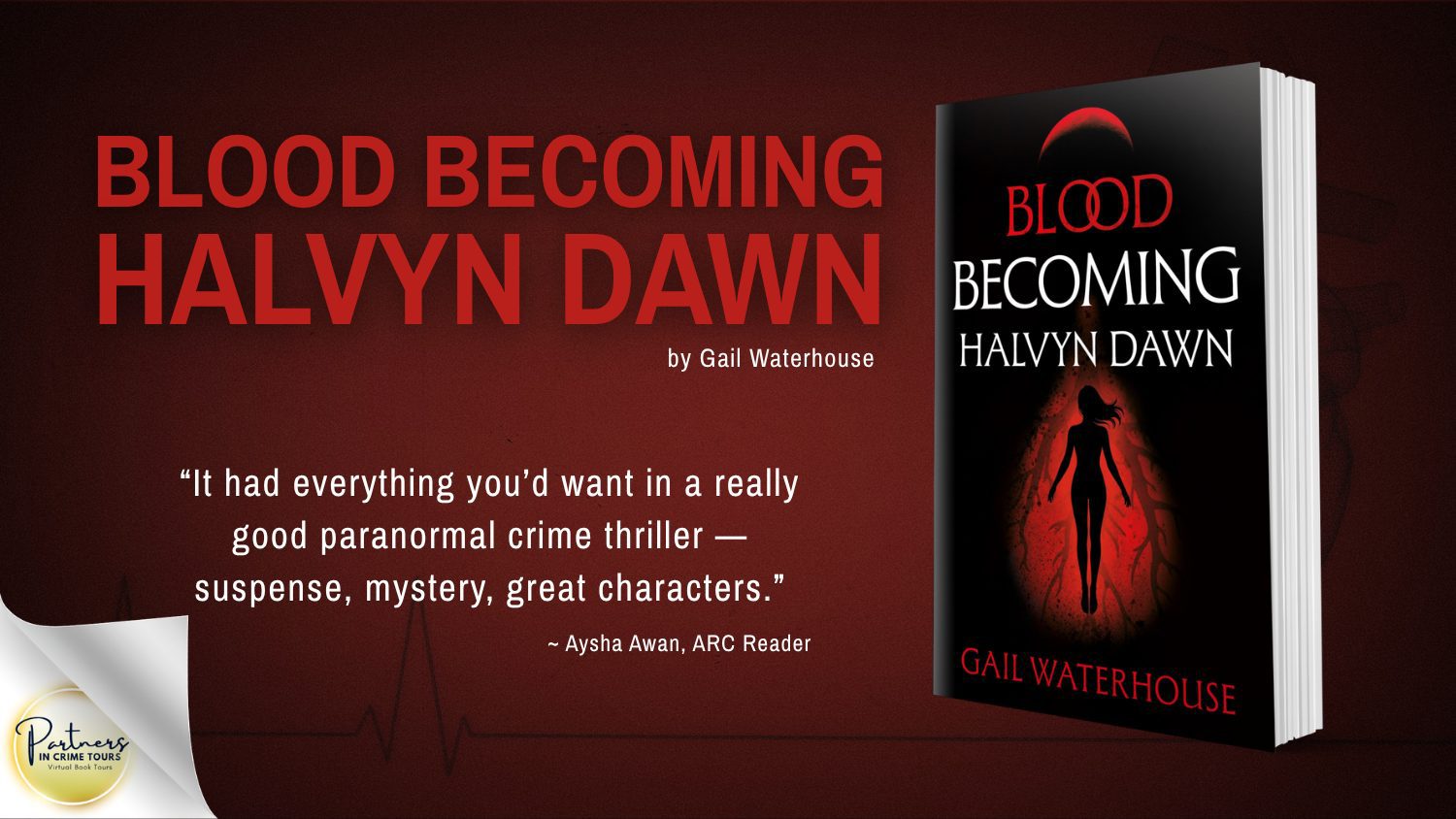
"It had everything you’d want in a really good paranormal crime thriller — suspense, mystery, great characters." ~ Aysha Awan, ARC Reader
"Thoroughly enjoyable… a storyline that rattles along with characters you want to know." ~ Richard Wolstenholme, Waterstones reviewer
"I loved Eleanor. The two sides of her. The detective but also the mom and the wife who has lost her husband." ~ Goodreads reviewer
Enjoy this guest post about the inspiration behind Blood Becoming from Gail Waterhouse
What If We Never Had to Say Goodbye?
People
often ask me where the idea for Blood Becoming came from. Most expect me
to say vampires.
The
truth is, it started somewhere completely different.
It
began with climate change.
Like
many others, I wonder what kind of world future generations might inherit. We
hear about rising temperatures, extreme weather, wildfires and disappearing
habitats almost daily. It made me question how humanity would survive if our
planet continued to change. Would science find the answers? Would we adapt, or
would we eventually have to evolve?
That
question became the foundation of Blood Becoming: Halvyn Dawn, a crime
thriller set initially in Britain in 2046. The supernatural creatures were
never there simply to frighten readers. They became a way of exploring what it
means to remain human in a rapidly changing world.
As I
wrote, another theme emerged naturally.
Loss.
Almost
every reader will experience the loss of someone they love. Whether it is a
parent, partner, friend, family member or much-loved pet, their absence
reshapes our lives.
For
my family, loss did not arrive just once.
Before
losing my husband, Paul, to cancer, we had already said goodbye to close family
members. The day after Paul’s funeral, we faced another heartbreaking goodbye
when we had to let our little pug, Teddy, go. A year later, my dad died. It
felt as though grief had become an unwelcome companion, returning before we had
recovered from the last goodbye.
What
affected me was not only my own grief, but watching my two sons experience it
too. Each of us coped differently. By the time my dad died, I was not sure I
had any tears left to cry.
Grief
changed me. I found myself emotionally detaching from situations that should
have affected me. It was not a conscious choice. It was how I survived.
Writing
became great company . It gave me somewhere to process emotions that often felt
too complicated for conversation. Many of those emotions naturally found their
way into my characters.
Those
traits became part of DCI Eleanor Moore.
As a
senior detective, Eleanor is exceptionally good at compartmentalising her
emotions. It allows her to remain calm in the face of horrific crimes,
concentrating on evidence rather than emotion. Yet those protective walls begin
to crack as the investigation becomes personal. Family has a way of reaching
places we thought we had closed forever.
Grief
also made me think differently about memory.
After
Paul died, I searched through old videos hoping to hear his voice, only to
discover that in many of them he was behind the camera or not speaking. I
wished I could preserve a memory, not simply as something I could recall, but
as something I could experience again.
That
thought became another question.
What
if memories were a lifeline? What if someone depended upon them to hold on to
their humanity?
Before
writing one of my favourite scenes, I travelled to meet my granddaughter for
the first time. She lives on the other side of the world, and holding her at
the airport brought an overwhelming sense of love and joy.
A
few months later, I wrote the scene where Eleanor meets her three-month-old
grandson for the first time. As I wrote, tears streamed down my face. The
emotion caught me completely by surprise. Only then did I realise how deeply
that earlier experience had become part of me.
As
the Blood Becoming series unfolds, readers will discover that its
central conflict is not simply between humans and supernatural beings.
It
is between love and acceptance.
The
antagonist possesses the power to protect those she loves from death and is
prepared to do almost anything to keep them alive. To her, letting go is not
inevitable. It is a failure she refuses to accept.
Eleanor
approaches the same dilemma from the opposite side. As a senior detective, she
has built her life around justice, ethics and the rule of law. Yet when her
family is threatened, those principles are no longer abstract. She must decide
how much of herself she is willing to compromise to save those she loves.
That
is the question at the heart of Blood Becoming.
We
worry about losing the natural world we know. We preserve photographs,
recordings and memories of people who are no longer with us. We tell ourselves
that death is part of life and some boundaries should never be crossed.
But
certainty is easy when the choice is not ours.
If
science offered you one chance to prevent the death of someone you loved, would
you refuse?
And
if saving them meant risking your principles, your humanity or the lives of
others, where would you draw the line?
Read an excerpt:
PROLOGUE
Friday 23 February 2046
THE SKY OVER the Spanish port was smeared with the colour of blood smoke, a heavy red-orange haze that clung to the air like the last breath of a dying sun. The scent of burning oil and salt hung thick, carried by the heavy coastal winds. It was sharp and acrid, biting against the damp of the sea. Fires crackled along the ridgelines of the coastal city, their glow flickering in the black water below. Distorted reflections trembled with every wave.
In the distance, the sound of falling glass mixed with the wail of sirens. Their shrill cries sliced through the thickening smoke like wounded animals in pain. Puerto de Málaga, once vibrant with the clatter of trade and the bustle of travellers, was now sprawling in disarray. The heat rose from the charred remnants of buildings, still glowing faintly as they collapsed in on themselves. The air was dense, almost suffocating, with the taste of ash and burning wood. The kind of fire that was all consuming.
At the edge of the docks, where the flames hadn’t yet reached, a body stirred amongst the shadows.
He rose from the ground slowly, uncertainly, like something dredged from the depths. His shirt was torn and wet with dark stains, his skin pale and cool against the rising heat. Beneath the surface of his eyes, something had shifted... something new and ravenous.
He didn’t know his name. He couldn’t remember. Not right now. Names were small things; the world was suddenly too loud for small things.
The salt air reeked of dashed hopes and desperation, but beneath that, beneath everything, was scent. Raw. Delicate. Sweet. It curled into his senses like perfume on fire.
People.
He could smell them.
Not just the sweat on their clothes, but the life blood moving beneath their skin. He could feel their warmth like a beacon. Hear their hearts. See the trails their bodies left in the air – vibrant, electric threads.
And he was starving.
The hunger lived in him like a second spine, twisting through his ribs, pulling at his throat. It was not like needing food, not like any hunger he had ever known. This was something more, something pure. It throbbed like instinct. It demanded.
Ahead, the docks were alive with panicked life. Families clutched their documents, arguing with port guards. Children wailed, sensing the anxiety around them. Ship horns blared over the shouting. The flames had cut off the southern road, and now hundreds of people pushed towards the vessels anchored at the quay, hoping to escape the violence swallowing the city. Amongst the chaos of the port, a young couple moved quickly, weaving through the crowd with a grace that seemed to carve a path of calm through the throngs of fearful, stressed faces. They clung to each other, their hopeful laughter soft but real, a gentle sound that contrasted with the heavy tension in the air.
Their smell hit him like lightning.
They were dark-skinned, their features a striking blend of beauty that caught the light in a way others didn’t. The rich, smooth tone of their skin seemed to absorb the firelight and the fading daylight, glimmering like polished wood. They weren’t the only ones with darker skin in the crowd, but there was something different about them. The way they moved, the way they stood, set them apart. Their essence was clean... pure. Not a trace of the fear or desperation that rippled through the others.
The woman, older than the man by a few years, wore a bright red scarf that fluttered behind her like a banner, bold and proud. The younger man, possibly her brother, had a leather satchel slung over one shoulder, his posture firm, the weight of it a comfort rather than a burden. They moved with a serene assurance, as if they had walked through fire to reach this moment, and now they were here, in this place, they knew they were safe. They were running towards something: towards home.
He couldn’t explain why, but he followed.
They didn’t see him. Not truly. Just a man in a crowd. A shape in their periphery.
Nearby, another couple had stopped at the checkpoint. An argument was unfolding. The air was thick with frustration. Shouts rose above the low murmur of the crowd. A tall Englishman, face red with rage, towered over a Spanish official. His words were clipped, sharp, each one slicing through the tense silence. His fists clenched. Veins stood out in his neck. Every inch of him was pressing forwards, demanding an answer.
Beside him, his wife stood still. She cradled a baby wrapped in a pristine white blanket. She remained silent, her eyes distant, her face pale, betraying none of the anxiety in the air.
The Spanish official, weary and weathered, gestured curtly, his voice firm but tired. ‘The passports for the woman and child,’ he stated, ‘are not valid for the British ship. They cannot board.
They will have to wait for the Spanish vessel, which departs later tonight.’
‘No!’ the man barked. ‘We stay together. We go as a family!’ His words were harsh, but they felt like they hung in the air, falling into the thickening tension like stones in water, creating ripples but no true movement. The woman beside him didn’t speak, only tightening her hold on the baby, whose cries were soft, unknowing. Her gaze, fixed on the horizon, seemed to be somewhere far away, as though the entire scene were not something she could reach.
The crowd around them seemed to retreat, uneasy. The man’s frustration was contagious, yet it failed to spark any real response from the official, who remained unmoved, his eyes cold, his posture rigid. The couple was surrounded by murmurs and mutters from the crowd, but it felt like nobody was truly listening. Concerned only with their own woes.
The woman shifted slightly, sensing something, or maybe it was just the sensation of being watched. Her grip tightened on the baby, her eyes flickering towards the shadows, though she saw nothing. The air around her thickened, and she couldn’t quite place why her heart began to race.
Because he was watching the argument. But he wasn’t watching them – the brother and sister. Their scent, now feeling distant. His mouth ached. His body trembled.
They had slipped from his grasp. The moment was gone. They had vanished into the flow of the crowd, their warmth and purity fading, like smoke lost to the night air. The watcher’s pulse quickened, but the hunt had shifted. He could still feel their faint trace, a lingering pull, but they were no longer within reach.
He quickly moved through the crowd, his steps light, measured, and the scent of sweat and smoke filled his senses, dulling his focus. But then, something changed. His head tilted slightly, drawn by a new, unexpected fragrance that cut through the heavy air. It was delicate, fresh, like the first spring buds on a tree, sharp yet soft. The scent was subtle, fleeting, but unmistakable. It was the scent of a young woman.
Alone.
Nervous.
His gaze flicked in her direction, a predator spotting its next target. He couldn’t see her yet, but he could feel her presence in the air; a vulnerability that stood out against the hardened masses around her. There was a stillness in her, but the air around her vibrated with anxious energy. She didn’t belong to the crowd, not like the others. She wasn’t lost, exactly, but there was an uncertainty in the way she moved, as though the port itself was a vast, unknowable place to her.
He moved slowly through the throng; his every sense tuned to her. Her scent drew him closer, a fragile thread that wound through the chaos. She wasn’t trying to escape, not in the way the others did. She was just... there. Walking, weaving through the people, her eyes darting, scanning for something. Looking for someone. Her nerves were a song to him, soft and fragile.
He could see her now, just ahead, her dark hair framing a face that seemed too young for the worry she carried. Her posture was hunched, as if she were trying to make herself smaller, to disappear into the crowd. She wasn’t trying to be seen, but the watcher saw her all the same.
And she was still.
Thinking.
He felt a stir of anticipation, his gaze narrowing as he took another step towards her. There was something about the way she looked, not at the crowd, not at anything. Her eyes kept drifting towards the shadows, as though she felt something watching her, though she couldn’t know it was him.
He moved closer, quietly... patient. He would have her. She was his now.
He moved silently, a smudge amongst shadows, slipping from container to crate, blending into the murky dark of the port. His steps were slow, calculated, his presence a breathless whisper in the night. Each movement was precise, natural.
Her footsteps echoed on the wooden boards as she moved through the labyrinth of abandoned structures. Her pace quickened, her heart already pounding, as if some deep instinct had begun to warn her. The air was heavy, thick with the scent of rust and salt, the smell of old fish and the faint, lingering tang of blood. This area of the dock felt empty, desolate, but there was something beneath it, a presence she couldn’t quite place. She turned a corner, her pace frantic now, as if her body knew something her mind refused to admit.
She glanced over her shoulder, and there it was, that chilling feeling of being followed. Her eyes searched the darkened spaces, the shadows between the crates, the broken walls of forgotten buildings, but there was nothing. Still, the hairs on the back of her neck stood on end.
She quickened her step, but then she made a mistake.
A wrong turn.
The path narrowed as she hurried down the dock, the sound of her boots slapping against the timber carrying through the silence. She didn’t see it at first, not until it was too late – a small, isolated room at the end of the corridor. The heavy open door loomed ahead like an invitation. Panic surged through her chest, but there was no turning back now. Her instincts screamed at her to flee, to find another way out, but her legs carried her forwards, into the dim light of the room.
The door slammed shut behind her.
She froze.
The room, that looked like a forgotten storage area, was empty except for some shelves, discarded crates and netting that smelt of old mildew. The walls felt like they were closing in on her, the air thick and close, the silence broken only by the sound of her ragged breathing. There was no way out. The windows were too small, the walls too strong, the door too solid.
And then, a sound. A faint click.
He had locked them in.
***
Excerpt from Blood Becoming: Halvyn Dawn by Gail Waterhouse. Copyright 2026 by Gail Waterhouse. Reproduced with permission from Gail Waterhouse. All rights reserved.
Author Bio:
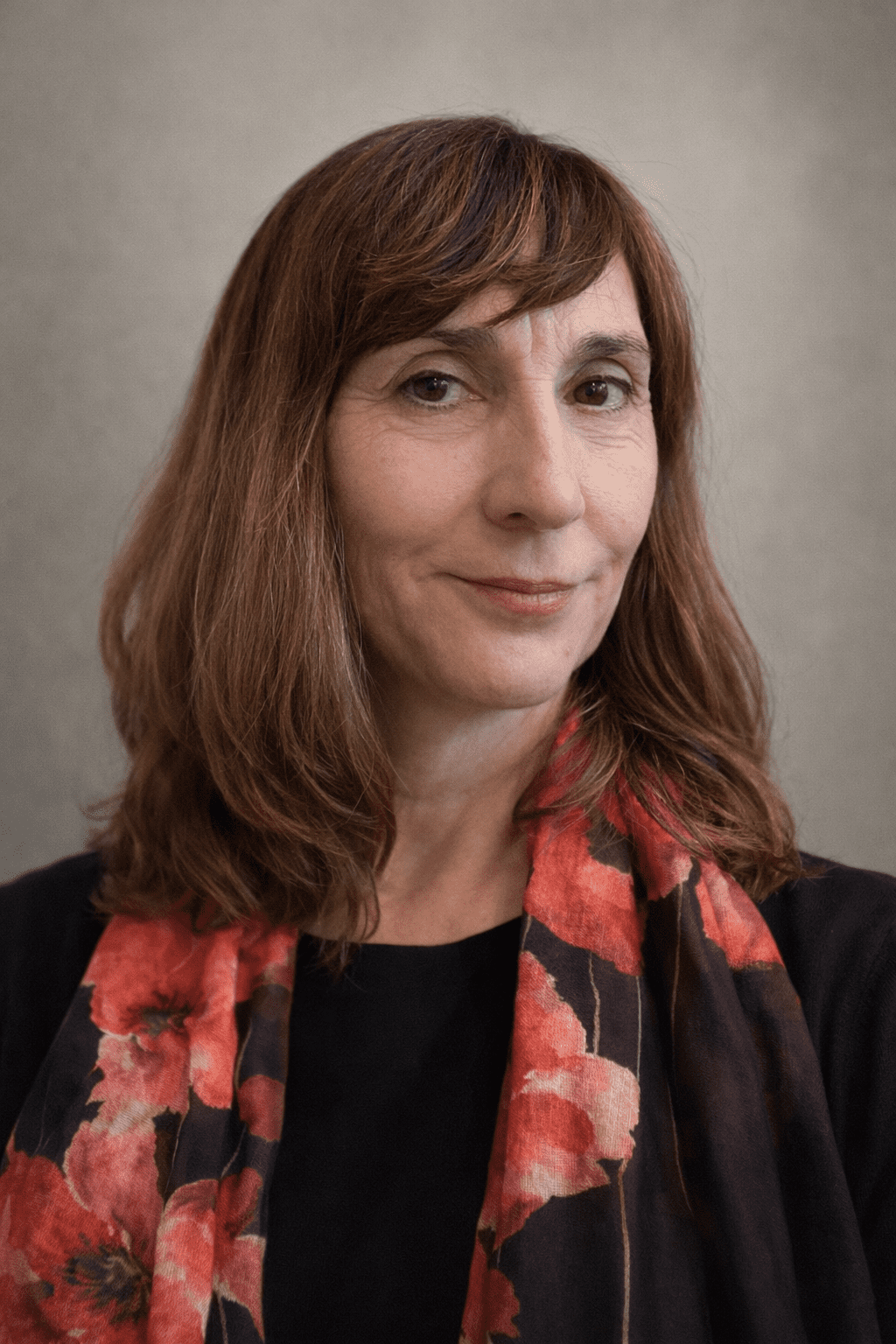
Gail Waterhouse is a UK-based author of crime thrillers with a speculative edge. With a background in design, and an MA in Creative & Media Education, she writes grounded, character-driven stories that blend police procedural realism with darker, thought-provoking themes.
Her work explores near-future worlds shaped by scientific change and human consequence, where the line between the natural and unnatural begins to blur. Inspired by conversations about climate change and humanity’s future, her stories examine what we might become when survival demands evolution.