Book Title: ALTERED (JUSTIN WRIGHT SUSPENSE SERIES Book 1) by Rob Kaufman Category: Adult Fiction (18 +), 270 pages Genre: Psychological Thriller, Suspense Publisher: Rob Kaufman Release date: May 2023 Content Rating: PG-13 +M: ALTERED has a few profanities and alludes very subtly to abuse but never gets graphic or says the words. "Trauma" is used by Justin, the psychiatrist.
Book Description:
When Frank Devlin walks into Justin Wright's office, the renowned New York City psychiatrist decides to take on one of the most challenging cases of his career.
Justin is determined to help Frank, a young man with multiple personalities (“alters”), live a happier, more fulfilling life. Little does he know that Frank and his alters are secretly weaving themselves into Justin’s life in ways that will affect the Wright family forever.
A suspense-filled story driven by emotion, angst, and the ultimate revenge, “Altered” takes readers down a twisted path of uncertainty and mind games—leaving them shocked, heartbroken, and questioning what could possibly come next...
Alteredis the first book in the Justin Wright series. Justin is a psychiatrist who takes on a new patient named Frank. He quickly realizes that there is something unusual about Frank and diagnoses him with having multiple personalities.
I listened to the Audible version and I did enjoy the production. I thought the narrator did a really good job of changing voices for Frank and his alters. It really helped me orient myself to which alter was speaking. I did like the aspect of multiple personalities in the story. I found that part fascinating. I also thought the author handled the subject of family grief well.
While I did like the book, I didn't love it. I had a big issue that took away from my total enjoyment. What I could not get behind was one character's decision not to say anything about his boyfriend and the danger he could pose. It just didn't track for me especially when he was studying psychology himself. It took me out of the story because I could not suspend my disbelief. Despite that, I think this is a book worth trying out. I may continue with the series at a later date.
DCI Eleanor Moore is drawn into a series of brutal killings that defy explanation. As she follows the trail of evidence, she uncovers links between the crimes, the vaccine, and a shadowy conspiracy determined to control the future. The investigation becomes painfully personal when Eleanor realises a member of her own family may be entangled in the very secrets she is chasing.
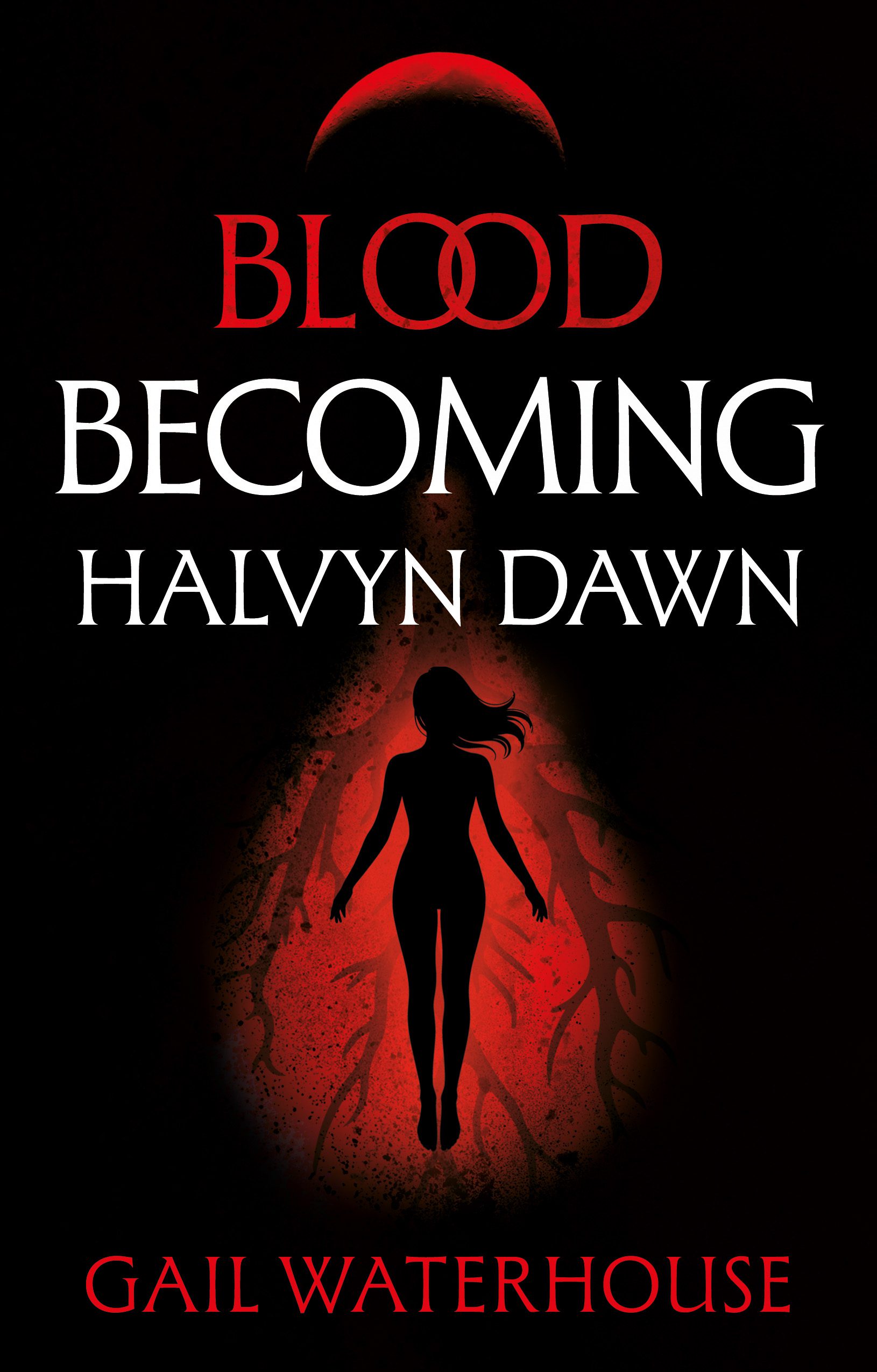
Blood Becoming: Halvyn Dawn is a paranormal crime thriller set in 2046, where the aftermath of a contaminated vaccine has altered humanity in ways no one yet fully understands. Hybrid beings walk among us, their true nature hidden until violence drags them into the light.
Praise for Blood Becoming: Halvyn Dawn:
"Highly compelling with many unexpected twists." ~ Natalie Key, Female First
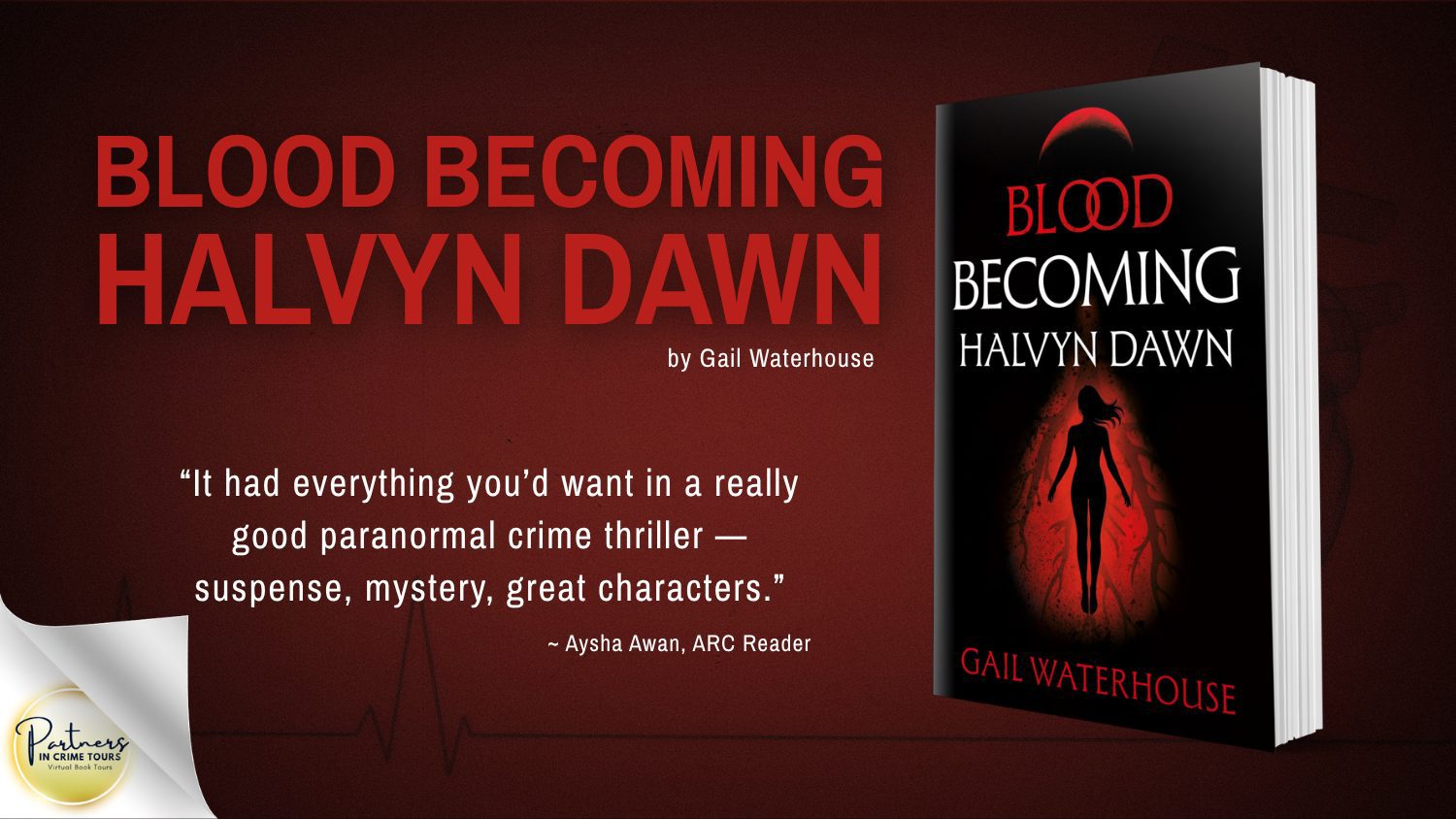
"It had everything you’d want in a really good paranormal crime thriller — suspense, mystery, great characters." ~ Aysha Awan, ARC Reader
"Thoroughly enjoyable… a storyline that rattles along with characters you want to know." ~ Richard Wolstenholme, Waterstones reviewer
"I loved Eleanor. The two sides of her. The detective but also the mom and the wife who has lost her husband." ~ Goodreads reviewer
Enjoy this guest post about the inspiration behind Blood Becoming from Gail Waterhouse
What If We Never Had to Say Goodbye?
People
often ask me where the idea for Blood Becoming came from. Most expect me
to say vampires.
The
truth is, it started somewhere completely different.
It
began with climate change.
Like
many others, I wonder what kind of world future generations might inherit. We
hear about rising temperatures, extreme weather, wildfires and disappearing
habitats almost daily. It made me question how humanity would survive if our
planet continued to change. Would science find the answers? Would we adapt, or
would we eventually have to evolve?
That
question became the foundation of Blood Becoming: Halvyn Dawn, a crime
thriller set initially in Britain in 2046. The supernatural creatures were
never there simply to frighten readers. They became a way of exploring what it
means to remain human in a rapidly changing world.
As I
wrote, another theme emerged naturally.
Loss.
Almost
every reader will experience the loss of someone they love. Whether it is a
parent, partner, friend, family member or much-loved pet, their absence
reshapes our lives.
For
my family, loss did not arrive just once.
Before
losing my husband, Paul, to cancer, we had already said goodbye to close family
members. The day after Paul’s funeral, we faced another heartbreaking goodbye
when we had to let our little pug, Teddy, go. A year later, my dad died. It
felt as though grief had become an unwelcome companion, returning before we had
recovered from the last goodbye.
What
affected me was not only my own grief, but watching my two sons experience it
too. Each of us coped differently. By the time my dad died, I was not sure I
had any tears left to cry.
Grief
changed me. I found myself emotionally detaching from situations that should
have affected me. It was not a conscious choice. It was how I survived.
Writing
became great company . It gave me somewhere to process emotions that often felt
too complicated for conversation. Many of those emotions naturally found their
way into my characters.
Those
traits became part of DCI Eleanor Moore.
As a
senior detective, Eleanor is exceptionally good at compartmentalising her
emotions. It allows her to remain calm in the face of horrific crimes,
concentrating on evidence rather than emotion. Yet those protective walls begin
to crack as the investigation becomes personal. Family has a way of reaching
places we thought we had closed forever.
Grief
also made me think differently about memory.
After
Paul died, I searched through old videos hoping to hear his voice, only to
discover that in many of them he was behind the camera or not speaking. I
wished I could preserve a memory, not simply as something I could recall, but
as something I could experience again.
That
thought became another question.
What
if memories were a lifeline? What if someone depended upon them to hold on to
their humanity?
Before
writing one of my favourite scenes, I travelled to meet my granddaughter for
the first time. She lives on the other side of the world, and holding her at
the airport brought an overwhelming sense of love and joy.
A
few months later, I wrote the scene where Eleanor meets her three-month-old
grandson for the first time. As I wrote, tears streamed down my face. The
emotion caught me completely by surprise. Only then did I realise how deeply
that earlier experience had become part of me.
As
the Blood Becoming series unfolds, readers will discover that its
central conflict is not simply between humans and supernatural beings.
It
is between love and acceptance.
The
antagonist possesses the power to protect those she loves from death and is
prepared to do almost anything to keep them alive. To her, letting go is not
inevitable. It is a failure she refuses to accept.
Eleanor
approaches the same dilemma from the opposite side. As a senior detective, she
has built her life around justice, ethics and the rule of law. Yet when her
family is threatened, those principles are no longer abstract. She must decide
how much of herself she is willing to compromise to save those she loves.
That
is the question at the heart of Blood Becoming.
We
worry about losing the natural world we know. We preserve photographs,
recordings and memories of people who are no longer with us. We tell ourselves
that death is part of life and some boundaries should never be crossed.
But
certainty is easy when the choice is not ours.
If
science offered you one chance to prevent the death of someone you loved, would
you refuse?
And
if saving them meant risking your principles, your humanity or the lives of
others, where would you draw the line?
Read an excerpt:
PROLOGUE
Friday 23 February 2046
THE SKY OVER the Spanish port was smeared with the colour of blood smoke, a heavy red-orange haze that clung to the air like the last breath of a dying sun. The scent of burning oil and salt hung thick, carried by the heavy coastal winds. It was sharp and acrid, biting against the damp of the sea. Fires crackled along the ridgelines of the coastal city, their glow flickering in the black water below. Distorted reflections trembled with every wave.
In the distance, the sound of falling glass mixed with the wail of sirens. Their shrill cries sliced through the thickening smoke like wounded animals in pain. Puerto de Málaga, once vibrant with the clatter of trade and the bustle of travellers, was now sprawling in disarray. The heat rose from the charred remnants of buildings, still glowing faintly as they collapsed in on themselves. The air was dense, almost suffocating, with the taste of ash and burning wood. The kind of fire that was all consuming.
At the edge of the docks, where the flames hadn’t yet reached, a body stirred amongst the shadows.
He rose from the ground slowly, uncertainly, like something dredged from the depths. His shirt was torn and wet with dark stains, his skin pale and cool against the rising heat. Beneath the surface of his eyes, something had shifted... something new and ravenous.
He didn’t know his name. He couldn’t remember. Not right now. Names were small things; the world was suddenly too loud for small things.
The salt air reeked of dashed hopes and desperation, but beneath that, beneath everything, was scent. Raw. Delicate. Sweet. It curled into his senses like perfume on fire.
People.
He could smell them.
Not just the sweat on their clothes, but the life blood moving beneath their skin. He could feel their warmth like a beacon. Hear their hearts. See the trails their bodies left in the air – vibrant, electric threads.
And he was starving.
The hunger lived in him like a second spine, twisting through his ribs, pulling at his throat. It was not like needing food, not like any hunger he had ever known. This was something more, something pure. It throbbed like instinct. It demanded.
Ahead, the docks were alive with panicked life. Families clutched their documents, arguing with port guards. Children wailed, sensing the anxiety around them. Ship horns blared over the shouting. The flames had cut off the southern road, and now hundreds of people pushed towards the vessels anchored at the quay, hoping to escape the violence swallowing the city. Amongst the chaos of the port, a young couple moved quickly, weaving through the crowd with a grace that seemed to carve a path of calm through the throngs of fearful, stressed faces. They clung to each other, their hopeful laughter soft but real, a gentle sound that contrasted with the heavy tension in the air.
Their smell hit him like lightning.
They were dark-skinned, their features a striking blend of beauty that caught the light in a way others didn’t. The rich, smooth tone of their skin seemed to absorb the firelight and the fading daylight, glimmering like polished wood. They weren’t the only ones with darker skin in the crowd, but there was something different about them. The way they moved, the way they stood, set them apart. Their essence was clean... pure. Not a trace of the fear or desperation that rippled through the others.
The woman, older than the man by a few years, wore a bright red scarf that fluttered behind her like a banner, bold and proud. The younger man, possibly her brother, had a leather satchel slung over one shoulder, his posture firm, the weight of it a comfort rather than a burden. They moved with a serene assurance, as if they had walked through fire to reach this moment, and now they were here, in this place, they knew they were safe. They were running towards something: towards home.
He couldn’t explain why, but he followed.
They didn’t see him. Not truly. Just a man in a crowd. A shape in their periphery.
Nearby, another couple had stopped at the checkpoint. An argument was unfolding. The air was thick with frustration. Shouts rose above the low murmur of the crowd. A tall Englishman, face red with rage, towered over a Spanish official. His words were clipped, sharp, each one slicing through the tense silence. His fists clenched. Veins stood out in his neck. Every inch of him was pressing forwards, demanding an answer.
Beside him, his wife stood still. She cradled a baby wrapped in a pristine white blanket. She remained silent, her eyes distant, her face pale, betraying none of the anxiety in the air.
The Spanish official, weary and weathered, gestured curtly, his voice firm but tired. ‘The passports for the woman and child,’ he stated, ‘are not valid for the British ship. They cannot board.
They will have to wait for the Spanish vessel, which departs later tonight.’
‘No!’ the man barked. ‘We stay together. We go as a family!’ His words were harsh, but they felt like they hung in the air, falling into the thickening tension like stones in water, creating ripples but no true movement. The woman beside him didn’t speak, only tightening her hold on the baby, whose cries were soft, unknowing. Her gaze, fixed on the horizon, seemed to be somewhere far away, as though the entire scene were not something she could reach.
The crowd around them seemed to retreat, uneasy. The man’s frustration was contagious, yet it failed to spark any real response from the official, who remained unmoved, his eyes cold, his posture rigid. The couple was surrounded by murmurs and mutters from the crowd, but it felt like nobody was truly listening. Concerned only with their own woes.
The woman shifted slightly, sensing something, or maybe it was just the sensation of being watched. Her grip tightened on the baby, her eyes flickering towards the shadows, though she saw nothing. The air around her thickened, and she couldn’t quite place why her heart began to race.
Because he was watching the argument. But he wasn’t watching them – the brother and sister. Their scent, now feeling distant. His mouth ached. His body trembled.
They had slipped from his grasp. The moment was gone. They had vanished into the flow of the crowd, their warmth and purity fading, like smoke lost to the night air. The watcher’s pulse quickened, but the hunt had shifted. He could still feel their faint trace, a lingering pull, but they were no longer within reach.
He quickly moved through the crowd, his steps light, measured, and the scent of sweat and smoke filled his senses, dulling his focus. But then, something changed. His head tilted slightly, drawn by a new, unexpected fragrance that cut through the heavy air. It was delicate, fresh, like the first spring buds on a tree, sharp yet soft. The scent was subtle, fleeting, but unmistakable. It was the scent of a young woman.
Alone.
Nervous.
His gaze flicked in her direction, a predator spotting its next target. He couldn’t see her yet, but he could feel her presence in the air; a vulnerability that stood out against the hardened masses around her. There was a stillness in her, but the air around her vibrated with anxious energy. She didn’t belong to the crowd, not like the others. She wasn’t lost, exactly, but there was an uncertainty in the way she moved, as though the port itself was a vast, unknowable place to her.
He moved slowly through the throng; his every sense tuned to her. Her scent drew him closer, a fragile thread that wound through the chaos. She wasn’t trying to escape, not in the way the others did. She was just... there. Walking, weaving through the people, her eyes darting, scanning for something. Looking for someone. Her nerves were a song to him, soft and fragile.
He could see her now, just ahead, her dark hair framing a face that seemed too young for the worry she carried. Her posture was hunched, as if she were trying to make herself smaller, to disappear into the crowd. She wasn’t trying to be seen, but the watcher saw her all the same.
And she was still.
Thinking.
He felt a stir of anticipation, his gaze narrowing as he took another step towards her. There was something about the way she looked, not at the crowd, not at anything. Her eyes kept drifting towards the shadows, as though she felt something watching her, though she couldn’t know it was him.
He moved closer, quietly... patient. He would have her. She was his now.
He moved silently, a smudge amongst shadows, slipping from container to crate, blending into the murky dark of the port. His steps were slow, calculated, his presence a breathless whisper in the night. Each movement was precise, natural.
Her footsteps echoed on the wooden boards as she moved through the labyrinth of abandoned structures. Her pace quickened, her heart already pounding, as if some deep instinct had begun to warn her. The air was heavy, thick with the scent of rust and salt, the smell of old fish and the faint, lingering tang of blood. This area of the dock felt empty, desolate, but there was something beneath it, a presence she couldn’t quite place. She turned a corner, her pace frantic now, as if her body knew something her mind refused to admit.
She glanced over her shoulder, and there it was, that chilling feeling of being followed. Her eyes searched the darkened spaces, the shadows between the crates, the broken walls of forgotten buildings, but there was nothing. Still, the hairs on the back of her neck stood on end.
She quickened her step, but then she made a mistake.
A wrong turn.
The path narrowed as she hurried down the dock, the sound of her boots slapping against the timber carrying through the silence. She didn’t see it at first, not until it was too late – a small, isolated room at the end of the corridor. The heavy open door loomed ahead like an invitation. Panic surged through her chest, but there was no turning back now. Her instincts screamed at her to flee, to find another way out, but her legs carried her forwards, into the dim light of the room.
The door slammed shut behind her.
She froze.
The room, that looked like a forgotten storage area, was empty except for some shelves, discarded crates and netting that smelt of old mildew. The walls felt like they were closing in on her, the air thick and close, the silence broken only by the sound of her ragged breathing. There was no way out. The windows were too small, the walls too strong, the door too solid.
And then, a sound. A faint click.
He had locked them in.
***
Excerpt from Blood Becoming: Halvyn Dawn by Gail Waterhouse. Copyright 2026 by Gail Waterhouse. Reproduced with permission from Gail Waterhouse. All rights reserved.
Author Bio:
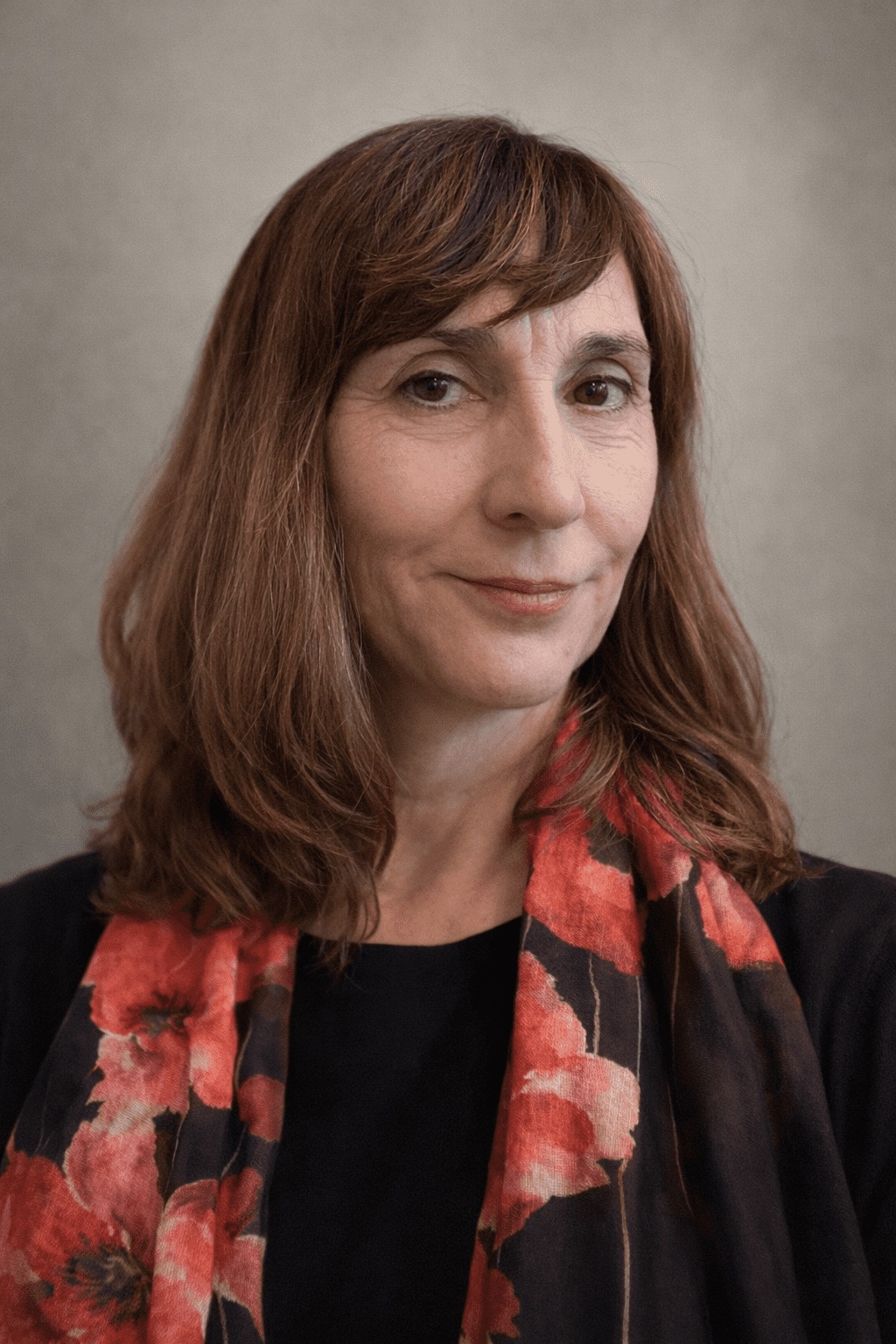
Gail Waterhouse is a UK-based author of crime thrillers with a speculative edge. With a background in design, and an MA in Creative & Media Education, she writes grounded, character-driven stories that blend police procedural realism with darker, thought-provoking themes.
Her work explores near-future worlds shaped by scientific change and human consequence, where the line between the natural and unnatural begins to blur. Inspired by conversations about climate change and humanity’s future, her stories examine what we might become when survival demands evolution.
Series: Boston Renegades Author: Eden Sloane Release: October 20, 2026 Goodreads: https://t.ly/6RZRJ Bookbub: https://t.ly/JeiyQ Cover Design: Talina with Bookin’ It Designs Promo Graphics Designer: @hercozybookshelf! Genre/Tropes: ●Hockey
Romance ●Fake
Marriage ●Morally
Grey Heroine ●Single
Dad ●Bookish
Hero ●Found
Family For a chance to save his daughter, he’ll do whatever it takes… Sebastian Voss has spent the last three years fighting for
custody of the little girl who means everything to him. Between a narcissistic
ex-wife, her new fiancé, and a steady stream of damaging headlines painting him
as the NHL’s favorite womanizing disaster, Sebastian is running out of options. Then he lands on one reckless, desperate solution. He needs a
wife. Kat Morrison should be the last woman he asks. He barely knows
anything about her except for her storm-gray eyes, freckles, and captivating aura. But Sebastian has been gone for her since the moment they met,
and if marrying Kat gives him a better chance at keeping his daughter safe,
he’ll risk everything. Even his heart. Kat knows saying yes is a mistake. Not because she doesn’t love him. Because she does. For three years, she’s been forced to write the lies that have
damaged Sebastian’s reputation and cost him chance after chance in court.
Blackmailed into obedience to save her brother’s life, Kat has become the weapon
aimed straight at the only man who’s ever made her feel safe. Now she’s living in his house, wearing his ring, loving his
daughter, and falling deeper for the family she was supposed to help destroy. But the closer Sebastian and Kat get, the harder it becomes to
tell where the lie ends and forever begins. And when the truth finally comes out, Sebastian could lose more
than custody of his daughter. He could lose the woman he’s loved all along. PreOrder Links: Universal: http://books2read.com/u/4NKgpG Amazon US: https://www.amazon.com/gp/product/B0HD9RGTKN Amazon CA: https://www.amazon.ca/gp/product/B0HD9RGTKN Amazon UK: https://www.amazon.co.uk/gp/product/B0HD9RGTKN Amazon AU: https://www.amazon.com.au/gp/product/B0HD9RGTKN About the Author: Eden Sloane believes the best love stories aren't
about perfect people. They're about imperfect people who keep choosing each
other, even after the truth changes everything. She writes emotionally charged contemporary romance
featuring devoted heroes, resilient heroines, impossible choices, and love
worth risking everything for. Her stories celebrate the courage it takes to
love completely. When she's not plotting emotional damage (followed by
well-earned happily ever afters), Eden can usually be found gardening, trying
to win an ongoing battle with the weeds in her yard, drinking far too much
caffeine, enjoying a nightcap while watching BBC crime dramas with her husband,
and keeping tabs on her four children. And if you're reading this during the winter, please send warm
thoughts. Eden is somewhere in the Midwest, questioning every life choice that
led her to a place where the air hurts her face. Author Social Media Links: TikTok: http://tiktok.com/@edensloaneauthor Facebook: http://facebook.com/edensloaneauthor Instagram: http://instagram.com/edensloaneauthor Amazon: https://www.amazon.com/stores/Eden-Sloane/author/B0HFT97Q4D Goodreads: https://www.goodreads.com/author/show/71675058.Eden_Sloane Website: https://www.edensloaneauthor.com/ Newsletter Sign Up: https://www.edensloaneauthor.com/Projects Bookbub: https://www.bookbub.com/authors/eden-sloane Threads: https://www.threads.com/@edensloaneauthor Twitter/X: https://x.com/ESloaneauthor
When sixteen-year-old Georgie and her troublemaking brother are shipped off to the wilderness for their stepmother’s newest reality show, Georgie is convinced it’ll be the worst experience of her life. Two weeks. No phones. Hiking. Camping. Cameras catching every humiliating second.
Then she meets Mack Gray. Tattooed, unreadable, and―among a cast of kids already branded as trouble―he’s the one she’s sure is dangerous.
One night, the counselors are chanting affirmations around the fire. By morning, they’re gone.
But the kids are not alone.
Georgie can feel it, stalking them from the shadows―watching, waiting, picking them off one by one. Whatever it is, it isn’t just hunting.
It’s playing.
And in this game, there seems to be only one ending: no one gets out alive.
Gingerbread Bones is a fresh re-telling of Hansel and Gretel. Georgie and her brother are forced to take part in a reality show where troubled teens have to survive in the wilderness. After reaching their destination, they wake up to the adults missing and clear indication that something is not right. Someone is forcing them to play a dangerous game.
I ended up really enjoying this one. The teens weren't annoying and their reactions to what was going on were fairly realistic. There were a lot of big personalities but they all worked well in the story. It was really creepy and had just the right level of gore that I like in YA horror. The witch was terrifying! The elements that related to Hansel and Gretel were woven very well into the narration and didn't feel forced. The ending was perfect. I highly recommend this one.
Author: Loreth Anne White Publisher: Montlake Publication Date: September 1, 2026
A propulsive true crime–inspired thriller of masks,
murder, and long-awaited justice by Washington Post bestselling
author Loreth Anne White.
By invitation only, nine elite guests board the
luxurious Black Orchid for its maiden voyage through the
mythic Aegean Sea. Not all of them will survive.
Poppy Buchanan, personal assistant to legendary war
photographer Lillith McGregor, sees the cruise as her chance at a better
life—if she can edge her way into Lillith’s will. But their exclusive company
includes Lillith’s disinherited stepson and his ruthlessly ambitious fiancée, a
silent Israeli businessman with a dangerous past, a charming Dutch antiquities
dealer with an agenda of his own, and a retired FBI profiler hunting a serial
killer he believes is aboard. Each passenger is a piece in a deadly puzzle
decades in the making.
Within three days, their paths will collide during a
catastrophic storm. Long-buried secrets surface. Masks fall away. And the
ensuing revelations trigger a chain of events that leads to one of the most
devastating maritime disasters in recent history. But the sinking of the Black
Orchid is no accident—it’s a reckoning.
Download today or read for FREE with Kindle Unlimited


.png)
.jpg)


